How to Manage Work From Home Employees Effectively in 2026
Managing employees outside the traditional office environment has become an important part of modern business operations. Many companies now work with remote and hybrid teams, making it necessary to use better communication methods, productivity tools, and performance management strategies. However, managing a distributed team requires more than simply assigning tasks and checking attendance.
Businesses need a structured approach to manage work from home employees while maintaining productivity, accountability, and employee satisfaction. The right combination of clear communication, performance tracking, time management, and employee monitoring tools can help managers keep their teams organised and focused.
In 2026, technology is making remote workforce management easier. Businesses can use employee monitoring software, time tracking systems, attendance management tools, and productivity analytics to understand how work is progressing.
Let's explore the most effective ways to manage remote employees and build a productive team.
1. Set Clear Goals and Daily Expectations
The first step to managing a remote team is setting clear goals and expectations. Employees should understand their responsibilities, deadlines, and expected results.
Managers should divide larger projects into smaller tasks and assign them with clear completion dates. This makes it easier to track progress and identify delays before they become bigger problems.
Some useful practices include:
Set daily and weekly work targets.
Assign tasks with clear deadlines.
Explain individual roles and responsibilities.
Review completed tasks regularly.
Provide feedback when required.
When employees understand what they need to achieve, they can organise their work more effectively. Clear expectations also help managers evaluate performance based on results rather than assumptions.
2. Track Employee Working Hours
Tracking working hours is important for understanding attendance, availability, and time management. Without a proper system, managers may find it difficult to know when employees start working, take breaks, or finish their scheduled hours.
A reliable employee time tracking system can help businesses maintain accurate work records.
Useful features include:
Employee check-in and check-out.
Total working hours.
Break time tracking.
Attendance reports.
Daily and monthly work summaries.
These features help managers maintain transparency and make attendance management easier. Employees can also understand their working schedules and maintain better time discipline.
3. Use Employee Monitoring Software Responsibly
Employee monitoring software can help businesses understand work activity and identify areas where productivity can improve. It gives managers better visibility into work progress without depending entirely on manual updates.
Depending on the software and its configuration, monitoring features may include:
Live screen monitoring.
Automatic screenshots.
Application and website usage tracking.
Active and idle time reports.
Employee activity summaries.
These insights can help managers understand how work time is being used and identify possible workflow problems.
However, monitoring should always be transparent and reasonable. Employees should know what information is being collected and why. The purpose should be to improve work processes, not to create unnecessary pressure.
4. Monitor Employee Productivity Through Performance Data
Productivity should not be measured only by the number of hours an employee spends working. Managers should also consider task completion, work quality, deadlines, and overall performance.
Productivity analytics can help businesses understand employee activity through reports and measurable indicators.
For example, managers can review:
Tasks completed during a specific period.
Time spent on assigned activities.
Work progress and pending tasks.
Application usage patterns.
Productivity trends over time.
This information helps managers identify employees who may need additional support, training, or better task allocation.
A data-based approach makes performance reviews more structured and helps businesses make informed decisions.
5. Maintain Regular Communication With Employees
Communication is one of the most important parts of remote team management. Employees working from different locations may sometimes feel disconnected from their managers and colleagues.
Regular communication helps everyone stay informed about projects, priorities, and important updates.
Businesses can improve communication by:
Conducting short daily or weekly meetings.
Using team messaging platforms.
Sharing project updates regularly.
Encouraging employees to ask questions.
Providing constructive feedback.
Managers should avoid unnecessary meetings and focus on meaningful discussions. Clear communication saves time and helps employees concentrate on their responsibilities.
6. Manage Tasks and Deadlines Efficiently
When employees work remotely, managers need a reliable way to assign tasks and check their progress. Without proper task management, work can become disorganised and deadlines may be missed.
A task management system helps businesses organise responsibilities and monitor project progress.
Important task management practices include:
Assign tasks to the right employees.
Set realistic deadlines.
Prioritise urgent activities.
Review pending and completed tasks.
Identify delays and resolve issues quickly.
Combining task management with productivity reports gives managers a clearer understanding of how projects are progressing.
7. Track Employee Attendance and Breaks
Attendance and break management are important for maintaining a balanced work schedule. Businesses need to ensure that employees follow their assigned schedules while also receiving appropriate break time.
An attendance management system can simplify this process by maintaining digital records of employee attendance, working hours, and leave information.
Managers can use these records to:
Check daily attendance.
Review late arrivals and early departures.
Monitor break schedules.
Manage employee leave requests.
Generate attendance reports.
Automated attendance records reduce manual work and make workforce management more organised.
8. Focus on Employee Well-Being and Work-Life Balance
Managing remote employees effectively does not mean monitoring every minute of their working day. Employees also need reasonable workloads, regular breaks, and time to maintain a healthy work-life balance.
Managers should encourage employees to follow practical work schedules and communicate when they face difficulties.
Some helpful practices include:
Avoid setting unrealistic deadlines.
Encourage regular breaks.
Respect non-working hours.
Recognise good performance.
Provide support when employees face challenges.
A supportive working environment can improve employee satisfaction and help businesses build stronger teams.
9. Use Workforce Management Software
Managing attendance, working hours, screen activity, and employee productivity through separate systems can become complicated. Workforce management software brings important employee management functions together in one place.
For example, platforms such as Zneus provide businesses with tools for employee activity monitoring, time tracking, attendance management, productivity analytics, and reporting.
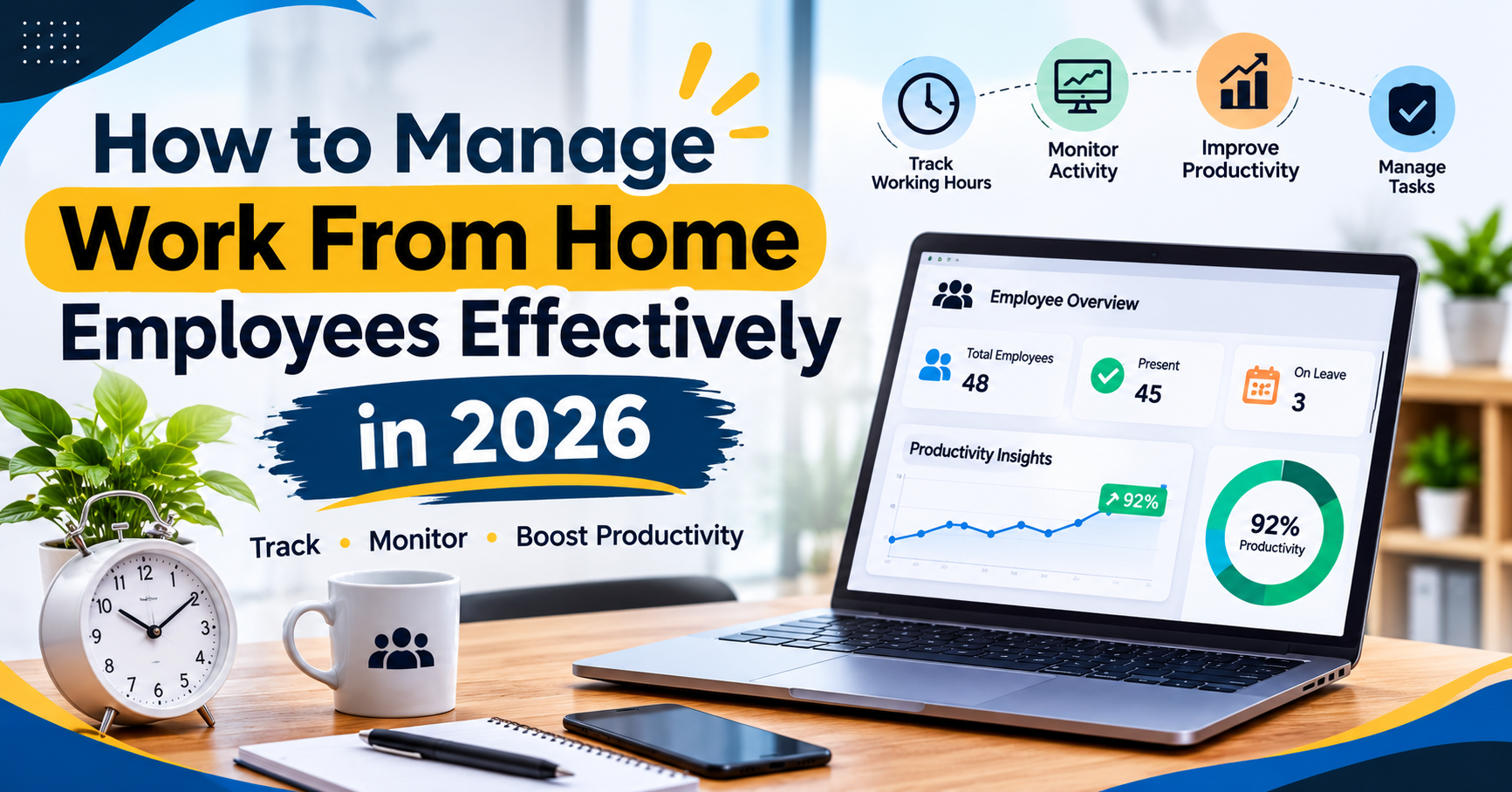
With a centralised dashboard, managers can get a clearer view of workforce activity and review important information without depending entirely on manual reports.
Depending on the selected features and settings, businesses can use workforce management software to:
Track employee working hours.
Review attendance and leave records.
Monitor application and website usage.
View activity reports and screenshots.
Understand productivity trends.
Manage employee performance more efficiently.
Choosing the right software can save administrative time and support better workforce management.
10. Review Performance and Improve Work Processes
Remote team management is not a one-time activity. Businesses should regularly review their processes and make improvements based on actual performance data.
Managers can schedule weekly or monthly reviews to understand what is working well and where employees need support.
During these reviews, consider:
Are employees completing their tasks on time?
Are working hours being managed properly?
Are there repeated workflow delays?
Do employees need additional training?
Are current tools helping the team?
Regular reviews help businesses identify problems early and create better working practices.
Benefits of Managing Remote Employees Effectively
A structured approach to remote workforce management can provide several benefits to businesses.
Improved productivity: Clear goals, task management, and performance insights help employees stay focused on their responsibilities.
Better time management: Time tracking and attendance reports make working schedules easier to manage.
Greater transparency: Employees and managers can understand work expectations, progress, and performance more clearly.
Reduced administrative work: Automated reports and attendance systems reduce repetitive manual tasks.
Better decision-making: Productivity data helps managers identify workflow issues and make informed improvements.
Stronger employee accountability: Clear responsibilities and regular feedback encourage employees to take ownership of their work.
Common Mistakes to Avoid While Managing Remote Employees
Even with the right tools, businesses can face challenges if remote teams are not managed properly.
Here are some common mistakes to avoid:
Excessive monitoring: Monitoring every small activity can reduce employee trust. Use monitoring tools transparently and for relevant business purposes.
Unclear expectations: Employees may struggle when tasks, responsibilities, and deadlines are not properly explained.
Ignoring employee feedback: Regular feedback helps managers understand challenges and improve work processes.
Too many meetings: Unnecessary meetings can interrupt focused work and reduce productivity.
Measuring only working hours: Performance should also consider completed tasks, quality, and results.
Using disconnected tools: Managing attendance, tasks, and productivity separately can make reporting more complicated.
Avoiding these mistakes can help businesses create a more organised and supportive remote working environment.
Conclusion
Learning how to manage work from home employees effectively in 2026 requires a combination of clear communication, structured task management, accurate time tracking, responsible employee monitoring, and regular performance reviews.
Businesses should focus on creating a transparent work environment where employees understand their responsibilities and managers have the information needed to support their teams.
Using workforce management software like Zneus can help bring employee monitoring, attendance tracking, time management, and productivity insights together in one platform. With the right processes and technology, businesses can manage remote teams more efficiently while maintaining employee trust and accountability.