Best Attendance Software for Indian SMEs: Features, Benefits and How to Choose
Managing employee attendance is an important part of running a successful business. For small and medium-sized enterprises (SMEs) in India, tracking working hours, managing leave requests, calculating overtime, and maintaining accurate attendance records can become challenging as the workforce grows.
Many businesses still rely on manual registers, spreadsheets, or separate attendance systems. These methods may work for a small team, but they can lead to calculation errors, missing records, time-consuming administrative tasks, and difficulties in preparing payroll.
This is where the best attendance software for Indian SMEs can make a difference. Attendance management software helps businesses record employee attendance, track working hours, manage leave, and maintain organized workforce records through a centralized system.
With the right solution, businesses can simplify daily attendance management, reduce manual work, improve record accuracy, and help managers make informed workforce decisions.
In this guide, we will explore the essential features of attendance software, its benefits for Indian SMEs, the different types of attendance systems available, and the factors businesses should consider before choosing the right solution.
What Is Attendance Software?
Attendance software is a digital system that helps organizations record, monitor, and manage employee attendance. Depending on its features, the software can record check-in and check-out times, track working hours, manage leave requests, calculate overtime, and generate attendance reports.
Instead of maintaining attendance information manually, businesses can use a centralized platform to organize employee records and simplify routine HR tasks.
Modern attendance management software may support several methods of recording attendance, including:
Web-based check-in and check-out.
Mobile attendance tracking.
Biometric attendance devices.
PIN or card-based attendance systems.
GPS-based attendance for eligible field employees.
Integration with payroll and HR management systems.
The availability of these features varies by software provider and subscription plan. Businesses should select an attendance system that matches their workforce size, work arrangements, budget, and operational requirements.
Why Do Indian SMEs Need Attendance Software?
Indian SMEs often operate with limited HR resources. As employee numbers increase, managing attendance manually can consume valuable time and create unnecessary administrative work.
The right attendance software can help address these challenges.
1. Reduce Manual Attendance Work
Manual attendance registers and spreadsheets require regular updates, calculations, and record verification. Even a small mistake can create confusion when reviewing employee working hours or preparing payroll.
Attendance management software helps centralize attendance records and automate supported processes, allowing HR teams to spend less time on repetitive administrative tasks.
2. Improve Attendance Record Accuracy
Incorrect check-in times, duplicate entries, missing records, and calculation errors can affect attendance summaries.
A digital attendance system can help maintain consistent records and make it easier to identify missing entries or unusual attendance patterns. Managers can then review and correct records according to company policy.
3. Simplify Leave Management
Managing leave through emails, messages, or paper forms can make it difficult to maintain updated records.
Attendance software with leave management features allows employees to submit requests digitally and enables authorized managers to review and approve them. Approved leave can then be reflected in the relevant attendance records.
4. Support Payroll Preparation
Attendance information often contributes to payroll calculations, including payable days, unpaid leave, overtime, and working hours.
Attendance software can help HR teams organize this information and, where supported, transfer it to payroll systems. Businesses should still verify payroll rules and calculations before processing salaries.
5. Improve Workforce Visibility
Attendance reports help managers understand employee presence, absenteeism patterns, late arrivals, and working-hour trends.
When used appropriately, these reports can support better scheduling, workforce planning, and communication between employees and management.
Key Features to Look for in the Best Attendance Software for Indian SMEs
Not every business needs the same attendance management features. Before choosing a solution, identify the features that will provide practical value to your organization.
1. Automated Check-In and Check-Out
A reliable attendance system should make it easy for employees to record when they start and finish work.
Depending on the platform, employees may check in through a web portal, mobile application, biometric device, or another supported method.
Automated records can reduce manual entry and make attendance information easier to review.
2. Real-Time Attendance Dashboard
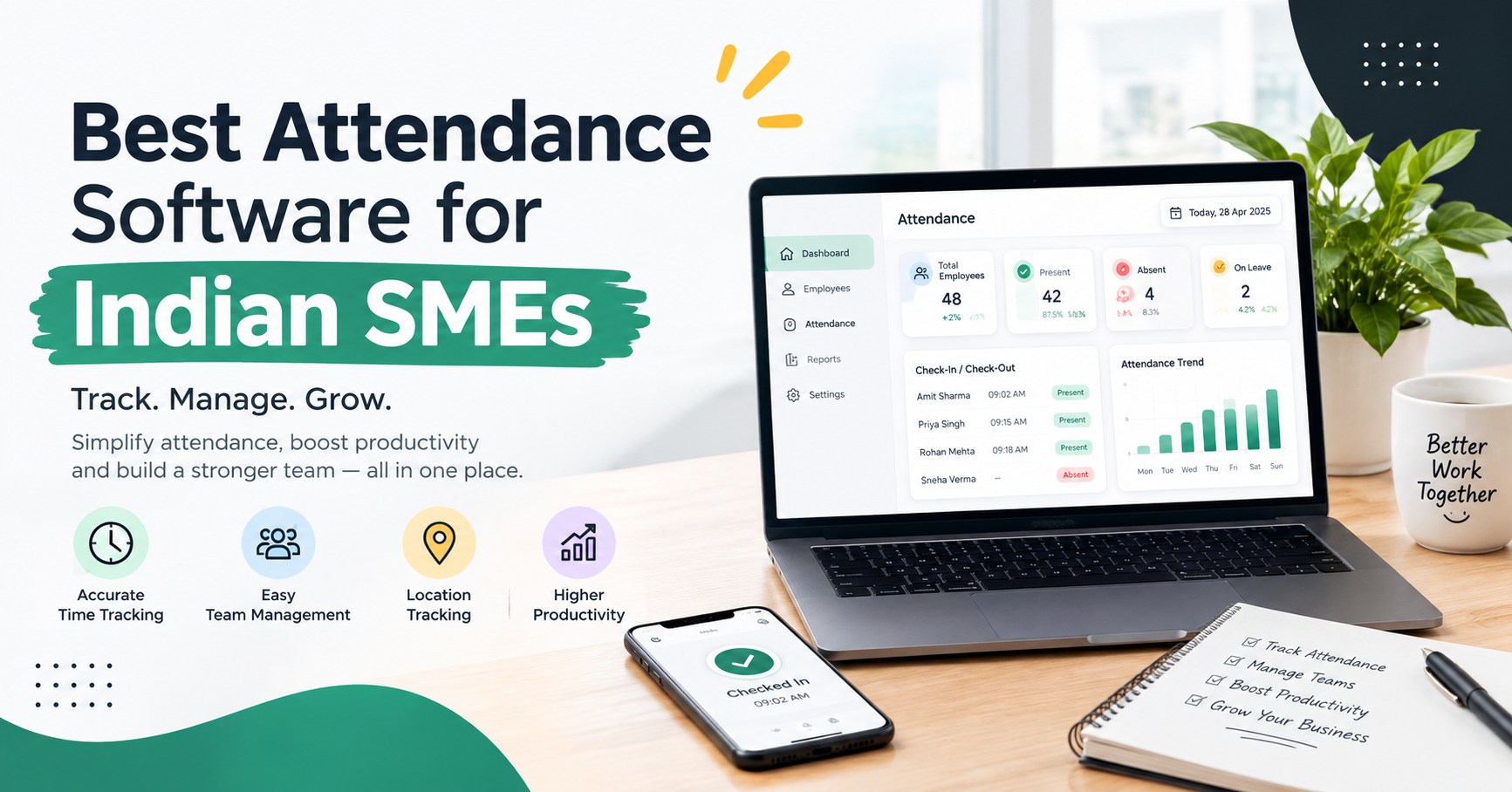
An attendance dashboard gives authorized managers an overview of employee attendance.
Useful dashboard information may include:
Total employees.
Employees present.
Employees absent.
Employees on approved leave.
Late arrivals and missing check-ins.
Daily or monthly attendance trends.
A clear dashboard helps HR teams identify records that need attention without manually checking every entry.
3. Leave and Holiday Management
SMEs should look for software that supports their leave policies, holiday calendars, approval workflows, and employee leave balances.
A centralized leave management feature helps reduce confusion and keeps relevant records organized.
Before purchasing, check whether the software can accommodate your company's leave rules and multiple locations, if applicable.
4. Mobile Attendance Tracking
Mobile attendance can be useful for businesses with employees who work at client sites, travel between locations, or perform field duties.
Some systems provide GPS-based attendance or location verification. These features should be configured according to legitimate business needs and communicated transparently to employees.
For office-based teams, a simple web-based or biometric system may be sufficient.
5. Attendance Reports and Analytics
Attendance reports help businesses review working hours, absenteeism, late arrivals, overtime, and other relevant metrics.
Monthly reports can also help HR teams identify recurring problems and evaluate whether attendance policies are working effectively.
Look for customizable reports and easy export options if your team regularly shares attendance data with finance or payroll departments.
6. Payroll Integration
Integration between attendance and payroll systems can reduce the need to enter the same information into multiple tools.
Depending on the software, approved attendance data may be used to support calculations for payable days, overtime, or unpaid leave.
Confirm whether the software integrates with your existing payroll platform and whether the integration is included in the subscription price.
7. Employee Self-Service
An employee self-service portal allows employees to review their attendance records, submit leave requests, and report missing or incorrect entries.
This feature can reduce routine questions directed to HR and help employees resolve attendance issues more efficiently.
8. Data Security and Access Controls
Attendance records contain employee information and should be handled responsibly.
Choose a system with appropriate access permissions, secure authentication, reliable data handling practices, and clear policies for data retention and deletion.
Businesses should also review applicable Indian privacy and employment requirements before enabling biometric collection, location tracking, or other sensitive monitoring features.
Types of Attendance Software for Indian SMEs
Different attendance systems serve different business needs.
Cloud-Based Attendance Software
Cloud-based attendance software stores and manages attendance information through an online platform.
It may be suitable for businesses that want centralized access, online reporting, and easier management across multiple offices. Availability depends on the provider's infrastructure and plan.
Biometric Attendance Software
Biometric attendance systems use technologies such as fingerprints or facial recognition to verify employee identity.
They may be useful in offices, factories, warehouses, and other workplaces that require controlled attendance recording. Businesses should evaluate device compatibility, operating conditions, data security, and privacy obligations.
Mobile Attendance Software
Mobile attendance software enables employees to record attendance using supported smartphone applications.
It can be useful for field teams, distributed operations, and employees who do not regularly report to a single office. Location-related features should be used only when appropriate and under transparent policies.
Web-Based Attendance Software
Web-based attendance systems allow employees or authorized administrators to record and review attendance through a browser.
This can be a practical option for SMEs that want a straightforward digital system without installing dedicated attendance hardware.
How to Choose the Right Attendance Software for Your Business
Selecting the best attendance software for Indian SMEs requires more than comparing prices. The system should fit your actual workflow and remain useful as the business grows.
Step 1: Identify Your Attendance Challenges
Start by identifying the main problems with your current process.
For example, your business may struggle with manual data entry, incorrect attendance records, complicated leave approvals, or delays in preparing payroll.
Understanding these challenges will help you shortlist software with relevant features.
Step 2: Consider Your Workforce Size
A business with 10 employees may need a simple attendance and leave management system, while a company with 200 employees may require multiple locations, reporting tools, payroll integration, and role-based permissions.
Choose a system that meets your current needs without creating unnecessary complexity.
Step 3: Compare Pricing and Total Cost
Review the subscription price, implementation fees, biometric device costs, training expenses, and additional charges for premium features.
Some providers charge per employee, while others offer fixed plans or hardware-based pricing.
Calculate the total cost before making a decision, and confirm whether the quoted price includes all required features.
Step 4: Check Ease of Use
Attendance software should be simple enough for employees and HR teams to use consistently.
A complicated interface may create confusion and reduce adoption. Request a demonstration or trial where available before committing to a subscription.
Step 5: Evaluate Reporting and Integrations
Check whether the software can generate the reports your business needs and integrate with your existing payroll or HR systems.
Reliable integration can reduce duplicate work and improve the consistency of employee records.
Step 6: Review Support and Scalability
Look for a provider that offers suitable customer support, documentation, and onboarding assistance.
The software should also be able to accommodate reasonable changes in workforce size, business locations, and attendance policies.
Benefits of Attendance Software for Small and Medium Businesses
Implementing the right attendance software can provide several operational benefits.
Less administrative work: Automated attendance records can reduce repetitive data entry and manual calculations.
Better record management: Centralized attendance data makes it easier to review, organize, and retrieve employee records.
Improved leave coordination: Digital leave requests and approval workflows help HR teams maintain updated information.
More efficient payroll preparation: Organized attendance data can reduce the effort needed to prepare payroll inputs.
Better workforce planning: Attendance reports can help managers identify recurring scheduling or absenteeism issues.
Improved transparency: Employees can review their attendance records and raise corrections through established processes.
These benefits depend on the quality of the software, the accuracy of its configuration, and how consistently the organization uses it.
Common Mistakes to Avoid When Selecting Attendance Software
Before purchasing attendance management software, avoid these common mistakes:
Choosing software based only on the lowest price.
Paying for features the business does not need.
Ignoring payroll compatibility.
Overlooking mobile access or biometric device requirements.
Failing to check reporting and export options.
Ignoring data security and privacy practices.
Not involving HR staff and employees in the evaluation process.
Failing to test the software before full implementation.
A practical evaluation based on real business requirements can help SMEs select a solution that offers long-term value.
Is Attendance Software Worth It for Indian SMEs?
Attendance software can be a worthwhile investment for SMEs that spend significant time managing attendance manually or frequently encounter errors in working-hour records.
The potential value comes from reducing repetitive administration, improving record accuracy, simplifying leave management, and supporting more efficient payroll preparation.
However, the right choice depends on the number of employees, attendance policies, existing systems, budget, and operational requirements.
Businesses should compare the software's total cost with the time saved and improvements achieved after implementation. A small company with straightforward requirements may need only a basic system, while a growing organization may benefit from a more comprehensive attendance and workforce management platform.
Conclusion
Choosing the best attendance software for Indian SMEs can help businesses simplify employee attendance, manage leave more efficiently, organize working-hour records, and support payroll preparation.
Before selecting a system, assess your workforce requirements, compare essential features, review pricing, and confirm that the software meets your security and privacy expectations.
The most suitable attendance management software is not necessarily the one with the largest number of features. It is the one that solves your business's actual problems, is easy for employees to use, and supports your company's growth.
By moving from manual processes to a well-managed digital attendance system, Indian SMEs can create more consistent HR workflows and spend more time focusing on business performance.