Multi-Tenant SaaS Security Explained
As businesses increasingly move their applications and data to cloud-based platforms, Multi-Tenant SaaS Security has become an important part of modern software security. Multi-tenant SaaS applications allow multiple customers, businesses, or organizations to use the same software infrastructure while keeping their information logically separated and protected.
A secure multi-tenant environment must ensure that one tenant cannot access another tenant's data, accounts, files, or resources. This is why strong data isolation, access control, encryption, monitoring, and compliance are essential for every multi-tenant SaaS platform.
What Is Multi-Tenant SaaS?
Multi-tenant SaaS is a software architecture where multiple customers use the same application or underlying infrastructure. Instead of creating a completely separate application environment for every customer, the SaaS provider operates a shared system while logically separating each customer's data and access.
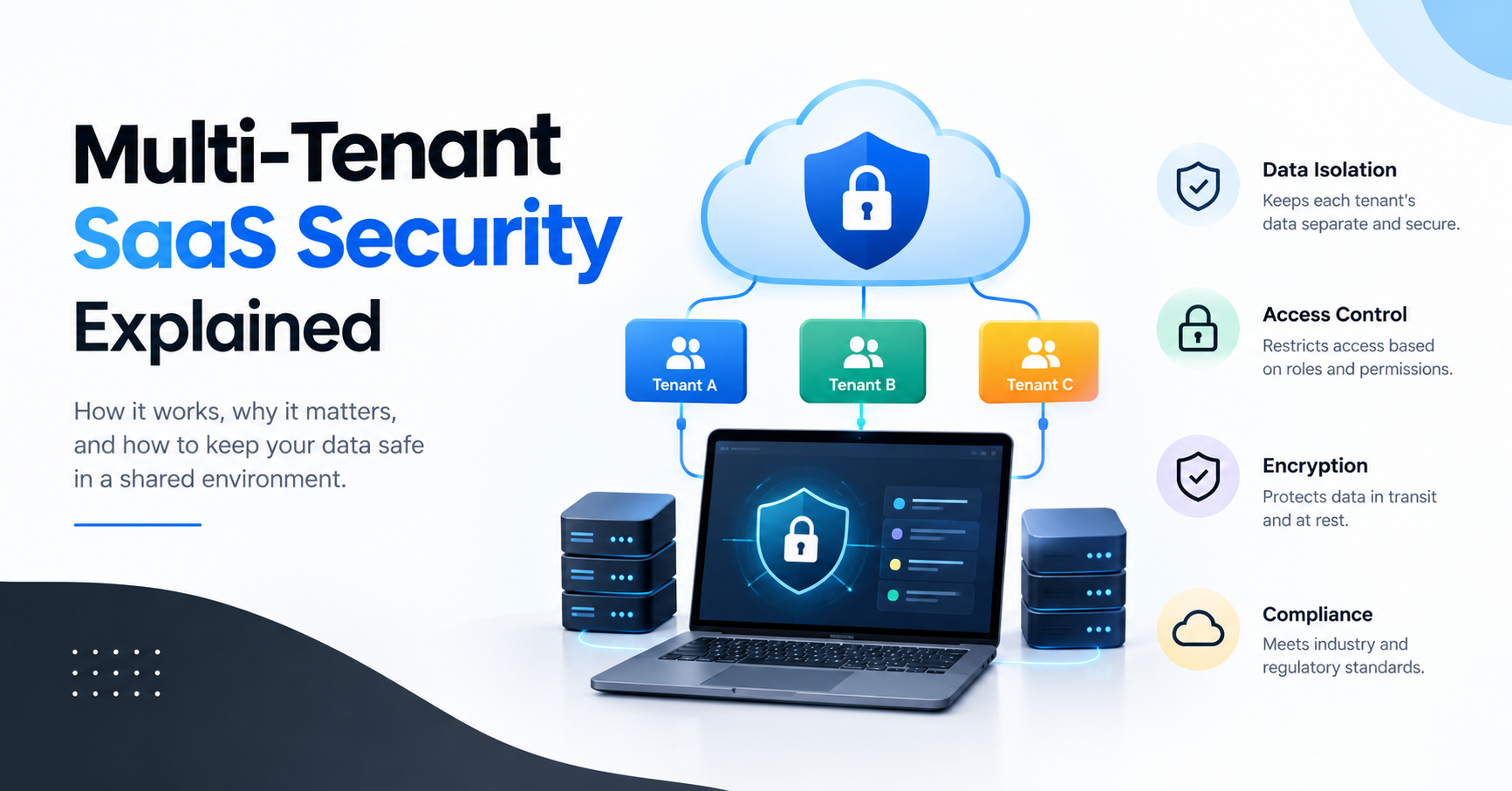
For example, imagine a SaaS platform used by three different companies: Tenant A, Tenant B, and Tenant C. All three companies may use the same application, servers, and cloud infrastructure, but their business data must remain separate.
This shared environment makes SaaS applications scalable and cost-effective. However, it also creates important security requirements. A properly designed Multi-Tenant SaaS Security architecture ensures that shared infrastructure does not result in unauthorized access between tenants.
Why Is Multi-Tenant SaaS Security Important?
Security becomes more complex when multiple customers operate within the same application environment. A vulnerability in authentication, permissions, database configuration, or application logic could potentially expose information belonging to another tenant.
Effective SaaS security protects customer information while allowing the application to operate efficiently.
Some major objectives of multi-tenant security include:
Protecting customer data from unauthorized access
Separating information between different tenants
Controlling user permissions and roles
Encrypting sensitive information
Monitoring suspicious activities
Maintaining regulatory and industry compliance
Preventing accidental data exposure
Securing APIs, databases, and cloud infrastructure
A strong security model gives customers greater confidence that their information remains protected even when they are sharing the same SaaS platform with other organizations.
1. Data Isolation
Data isolation is one of the most important elements of Multi-Tenant SaaS Security.
In a multi-tenant system, customer information may exist within shared databases or infrastructure. The application must therefore ensure that users can only access records associated with their own organization or tenant.
For example, if Tenant A has customer records, invoices, documents, and employee information, users from Tenant B should never be able to retrieve that information.
Data isolation can be implemented using different architectural approaches, including:
Tenant-specific database structures
Separate schemas
Tenant identifiers
Application-level authorization
Database access controls
Strong API validation
The exact architecture depends on the SaaS application's design, scale, and security requirements.
2. Access Control
Another major part of Multi-Tenant SaaS Security is access control.
Not every user within an organization should have access to every feature or piece of information. A SaaS application should verify who the user is and what they are allowed to access.
Role-based access control can help organizations define permissions for different users.
For example:
Administrators may manage the entire organization account.
Managers may access selected reports and employee information.
Standard users may only access their own assigned resources.
External users may have limited access to specific information.
Strong authentication combined with proper authorization helps reduce the risk of unauthorized access.
3. Encryption
Encryption protects information by converting readable data into a protected format that cannot easily be understood without the appropriate key.
In a secure SaaS environment, encryption can be used for data both at rest and in transit.
Data in transit refers to information moving between users, applications, APIs, and servers. Data at rest refers to information stored in databases, cloud storage, backups, and other systems.
Using appropriate encryption helps protect sensitive business information from unauthorized interception or exposure.
For SaaS providers, encryption should be considered alongside authentication, authorization, secure key management, and infrastructure security.
4. Tenant-Level Security
Every tenant should have a clearly defined security boundary.
A strong tenant security model ensures that authentication and authorization decisions are associated with the correct organization. This means the system should continuously verify which tenant a user belongs to before allowing access to protected resources.
Tenant identification should not depend only on information supplied by the user. The application should validate tenant context on the server side and apply authorization checks before retrieving or modifying data.
This approach helps prevent common access-control mistakes that could result in cross-tenant data exposure.
5. Monitoring and Security Auditing
Security does not stop after an application has been deployed.
Continuous monitoring can help SaaS providers identify unusual activity, failed login attempts, suspicious API requests, privilege changes, and other potentially risky behavior.
Security logs and audit trails can also help organizations understand:
Who accessed a resource
When the resource was accessed
Which action was performed
Which account or tenant performed the action
Whether permissions were changed
Whether unusual activity occurred
Regular security reviews can help identify weaknesses before they become serious problems.
6. Compliance and Regulatory Requirements
Compliance is another important consideration in Multi-Tenant SaaS Security.
Depending on the industry, location, and type of information being processed, a SaaS provider may need to follow specific privacy, security, or regulatory requirements.
Compliance programs can involve areas such as:
Data protection
Access management
Security monitoring
Data retention
Incident response
Audit documentation
Compliance requirements vary by organization and jurisdiction, so SaaS providers should identify the regulations relevant to their services and customers.
Common Multi-Tenant SaaS Security Risks
Although multi-tenant architecture provides scalability and efficiency, poorly designed systems can create security risks.
Some common risks include:
Cross-Tenant Data Access
A programming or authorization error could accidentally allow one tenant to access another tenant's information.
Weak Authentication
Weak passwords, poor session management, or inadequate authentication mechanisms can increase the risk of account compromise.
Excessive Permissions
Users with unnecessary privileges may accidentally or intentionally access information they do not require.
Insecure APIs
APIs are often used to exchange data between applications and services. Improper authorization checks can create opportunities for unauthorized access.
Misconfigured Cloud Infrastructure
Incorrectly configured storage, databases, networking, or permissions can expose sensitive information.
How to Build a Secure Multi-Tenant SaaS Platform
A strong security strategy should be designed from the beginning rather than added after the application is completed.
A secure approach generally includes:
Design strong tenant isolation
Ensure that each customer's data and resources are logically separated.
Implement authentication
Verify the identity of every user before providing access.
Use role-based access control
Give users only the permissions they actually need.
Encrypt sensitive data
Protect information both during transmission and while stored.
Secure APIs
Validate authentication, tenant context, and authorization for every protected request.
Monitor user activity
Maintain logs and monitor suspicious behavior.
Perform regular security testing
Test applications, APIs, databases, and infrastructure for vulnerabilities.
Maintain compliance controls
Review applicable privacy, security, and regulatory requirements regularly.
Multi-Tenant SaaS Security: Final Thoughts
Multi-Tenant SaaS Security is about protecting customer information within a shared software environment. While multiple organizations may use the same application and infrastructure, their data, permissions, and resources must remain properly separated.
The four major security principles highlighted in this approach are data isolation, access control, encryption, and compliance. Together with authentication, monitoring, secure APIs, and regular security testing, these controls can create a stronger security foundation for modern SaaS platforms.
As more businesses adopt cloud-based software, investing in reliable SaaS security is becoming increasingly important. A well-designed multi-tenant architecture can provide scalability and efficiency while maintaining strong protection for every tenant and the information they trust to the platform.