Break Management: Policy Template + Software
Managing employee breaks properly is an important part of maintaining a productive, fair, and well-organized workplace. A clear break management system helps businesses define break rules, track employee break timings, and make sure workplace policies are followed consistently.
Without a proper system, companies may face problems such as excessive break time, inaccurate attendance records, productivity issues, and confusion about break policies. This is where a clear break policy template and reliable break management software can make a major difference.
What Is Break Management?
Break management is the process of creating, organizing, monitoring, and managing employee break schedules during working hours. It allows businesses to establish clear rules about lunch breaks, tea breaks, short breaks, and other permitted rest periods.
A structured employee break management system can help managers understand when employees start and end their breaks while maintaining a fair system for everyone.
Instead of depending completely on manual records or spreadsheets, businesses can use break management software to automate break tracking and maintain accurate records.
Why Is a Break Management Policy Important?
A well-defined break policy provides employees with clear expectations regarding their working hours and break periods. It also helps managers maintain consistency across teams.
A good break management policy can cover:
- Allowed break duration
- Lunch break timings
- Short or tea break rules
- Number of permitted breaks
- Break scheduling procedures
- Rules for extended breaks
- Break recording and tracking
- Manager approval requirements
- Policy compliance
Having these rules written in a proper break policy template reduces confusion and creates a more transparent workplace environment.
Break Policy Template: What Should It Include?
A break policy template should be simple, clear, and easy for employees to understand. Every organization can customize its policy according to its working hours, team structure, and operational requirements.
A basic break policy template may include the following sections:
1. Break Eligibility
Clearly mention which employees are eligible for specific breaks and when those breaks can be taken.
2. Break Duration
Specify the standard duration for lunch breaks, short breaks, and other permitted rest periods.
3. Break Scheduling
Explain whether employees can choose their break timing or whether breaks are scheduled by managers.
4. Break Tracking
Define how employees should record their break start and end times.
5. Extended Breaks
Mention what employees should do if they need additional break time beyond the permitted duration.
6. Policy Compliance
Clearly explain the importance of following the organization's break policy and how repeated violations will be handled.
A properly designed break policy template makes the entire process easier for both employees and managers.
What Is Break Management Software?
Break management software is a digital solution that helps organizations automate and monitor employee break activities. Instead of maintaining break records manually, managers can use software to track break timings and review employee activity from a centralized dashboard.
Modern employee management systems can provide information such as:
- Total number of breaks
- Break duration
- Current employees on break
- Working employees
- Recent break activity
- Employee-wise break records
- Break reports
- Historical break data
This makes employee break tracking more organized and reduces the need for manual record keeping.
How Does Employee Break Tracking Work?
With employee break tracking, employees can record when they start and finish their breaks through the company's designated system.
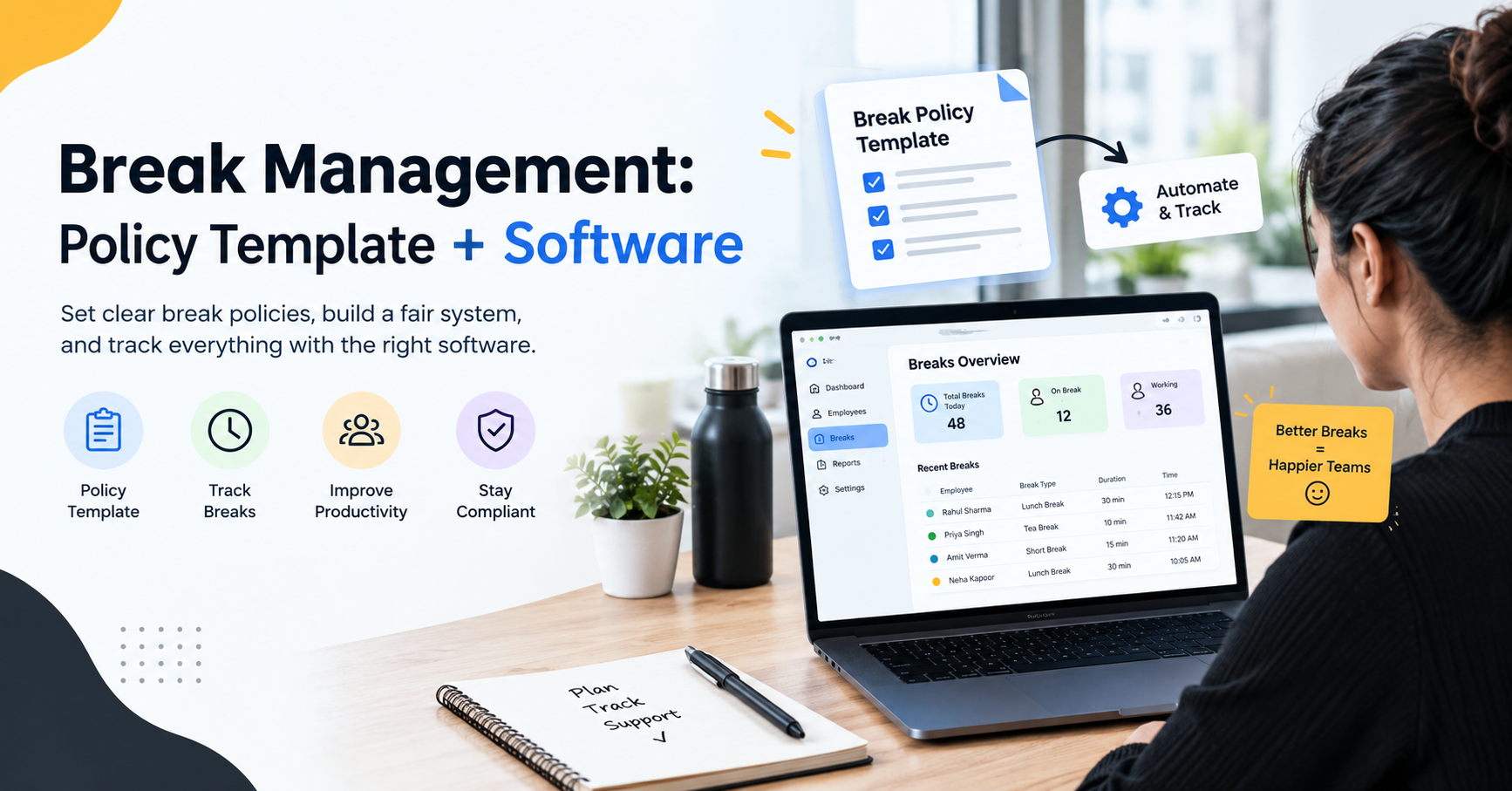
For example, a manager may see a dashboard showing:
Total Breaks: 48
Employees on Break: 12
Employees Working: 36
The manager can then review recent break information and identify break duration, timing, and employee activity.
This provides better visibility without requiring managers to constantly monitor employees manually.
Benefits of Using Break Management Software
Better Productivity Management
A structured break management system helps organizations understand how break schedules affect daily productivity. Managers can identify patterns and make better workforce decisions.
Accurate Break Records
Manual tracking can result in missing or inaccurate information. Break management software automatically records break activity, helping businesses maintain more reliable records.
Fair Workplace Policies
When the same break rules are applied consistently, employees have a clearer understanding of workplace expectations.
Less Administrative Work
Automated employee break tracking reduces the need to maintain spreadsheets or manually calculate break durations.
Better Reporting
Managers can access reports and review historical break information whenever required, making workforce management easier.
Improved Employee Experience
Breaks are an important part of a healthy working routine. A clear system allows employees to take their permitted breaks without unnecessary confusion.
Break Management Software vs Manual Tracking
| Feature | Manual Tracking | Break Management Software |
|---|---|---|
| Break recording | Manual | Automated |
| Break reports | Time-consuming | Easily accessible |
| Accuracy | Depends on employees/managers | More consistent |
| Employee visibility | Limited | Dashboard-based |
| Data management | Spreadsheets/paper | Centralized system |
| Monitoring | Manual | Digital |
| Productivity analysis | Difficult | Easier |
For growing organizations, break management software can provide a more efficient alternative to manual tracking.
How to Create an Effective Break Management Policy
Creating an effective break management policy does not have to be complicated. Start by understanding the organization's working schedule and employee requirements.
Follow these steps:
Step 1: Define standard break durations.
Step 2: Decide how employees should record breaks.
Step 3: Create a simple break policy template.
Step 4: Communicate the policy clearly to employees.
Step 5: Use break management software for automated tracking.
Step 6: Review break reports regularly.
Step 7: Update the policy when business requirements change.
This approach creates a structured process while giving managers better control over workforce scheduling.
Why Businesses Should Automate Break Management
As companies grow, managing employee schedules manually becomes increasingly difficult. A digital break management solution can centralize break records, simplify reporting, and provide managers with useful workforce information.
Instead of asking employees to maintain separate records or relying on spreadsheets, businesses can use break management software to automate important parts of the process.
The goal should not be to micromanage employees. Instead, the purpose of employee break tracking should be to create transparency, maintain fair policies, and improve workforce organization.
Final Thoughts
Effective break management helps businesses create a structured and transparent approach to employee breaks. A clear break policy template establishes workplace expectations, while break management software makes tracking, reporting, and managing break activity easier.
For organizations looking to improve workforce management, combining a clear policy with automated employee break tracking can save administrative time, improve accuracy, and create a more consistent workplace experience.