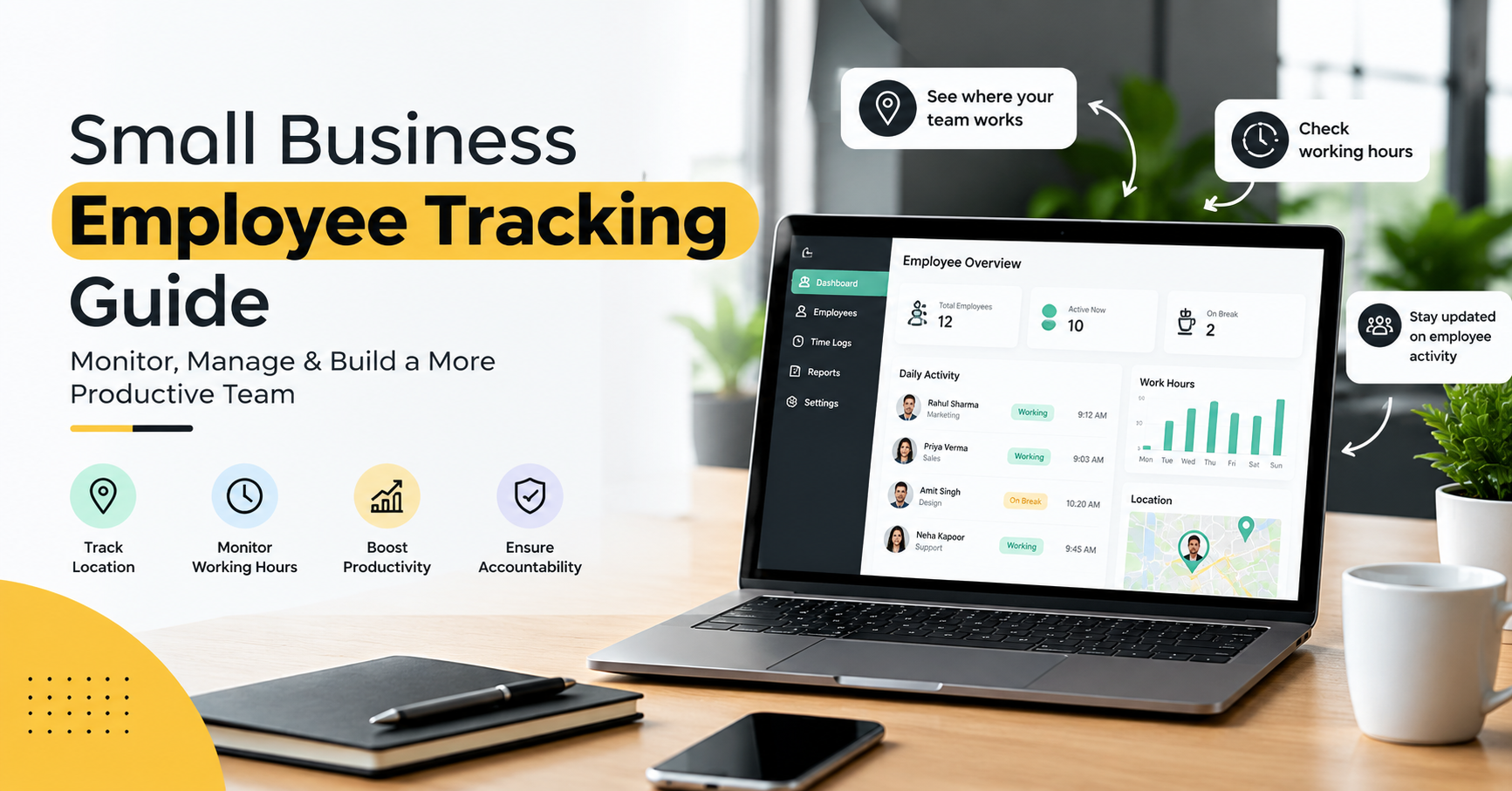
Small Business Employee Tracking Guide: Monitor, Manage & Build a More Productive Team
Managing a small business is not only about completing projects and meeting deadlines. Business owners and managers also need to understand how their teams are working, where time is being spent, and what can be improved. This is where employee tracking can help small businesses create better visibility into daily work activities and improve workforce productivity.
Modern employee tracking software allows businesses to monitor working hours, attendance, application usage, employee activity, productivity trends, and other important work-related information from a centralized dashboard. Instead of relying completely on manual reports or spreadsheets, managers can use real-time data to make better decisions.
What Is Employee Tracking?
Employee tracking is the process of monitoring work-related activities such as working hours, attendance, application usage, website activity, breaks, and productivity patterns.
For small businesses, employee tracking can provide a clearer picture of how teams spend their working time. It can be particularly useful for remote and hybrid teams where managers may not be physically present with employees.
With the right employee monitoring software, businesses can bring important workforce information together in one place and use it to identify productivity opportunities.
Why Small Businesses Need Employee Tracking
Small businesses often operate with limited teams and resources. Even a small amount of lost productive time can affect deadlines, customer service, and overall business growth.
A structured employee tracking system can help businesses:
- Monitor employee working hours
- Track attendance and late arrivals
- Understand productive and idle periods
- Monitor application and website usage
- Manage employee breaks
- Review productivity trends
- Generate detailed workforce reports
- Manage remote and hybrid employees more effectively
Instead of guessing where productivity problems are occurring, managers can use actual activity data to understand their team's work patterns.
1. Track Employee Working Hours
One of the most important parts of employee tracking is understanding working hours.
Manual attendance systems can require employees or HR teams to enter information themselves. This can create additional administrative work and may result in inaccurate records.
Employee tracking software can automatically record login and logout activity, calculate working hours, identify overtime, and highlight late arrivals or early departures.
This gives managers and HR teams a more organized way to manage attendance and working-time information.
2. Monitor Employee Productivity
Tracking hours alone does not always tell the complete story.
A person may be logged into a computer for eight hours, but that does not necessarily mean all eight hours were productive. Modern employee monitoring software can analyze activity patterns and help businesses understand productive, idle, and potentially unproductive periods.
Zneus uses AI-powered productivity analytics to analyze employee behavior and provide productivity scores and trends.
This information can help managers identify productivity bottlenecks and understand where teams may need additional support.
3. Understand Application and Website Usage
Employees often use multiple applications and websites during their working day.
Employee activity tracking can help businesses understand how much time is being spent on applications such as browsers, communication tools, spreadsheets, project-management platforms, and other work-related software.
Zneus can track application and website usage and provide time-based information about how employees use these tools.
This can help managers distinguish between essential work activities and unnecessary distractions.
4. Keep Remote Teams Connected
Remote and hybrid work has made workforce visibility more challenging for many small businesses.
Managers cannot always walk over to an employee's desk and ask about their current task. Employee tracking software provides a centralized way to understand work activity without depending entirely on manual updates.
Features such as live screen monitoring, activity tracking, working-hour reports, and productivity analytics can give managers better visibility into remote work.
Zneus supports remote and hybrid workforce management through features including live screen monitoring, activity tracking, productivity analytics, and automated reports.
5. Manage Breaks and Attendance
Break management is another important part of workforce productivity.
Employees need appropriate breaks, but businesses also need an accurate understanding of working patterns. A structured employee tracking system can record break durations and help managers identify unusual patterns.
Along with break management, businesses can track attendance, overtime, late arrivals, and employee work hours from a centralized system.
This reduces the need for repetitive manual attendance work and gives HR teams more organized records.
6. Use Automatic Screenshots for Work Visibility
For businesses managing remote employees, automatic screenshots can provide additional visibility into work activity.
Zneus allows businesses to configure automatic screenshots at different intervals, creating a visual timeline of employee activity.
When used transparently and according to company policies, this type of functionality can help managers review work activity and understand what was happening during specific periods.
7. Turn Employee Data Into Useful Reports
Collecting data is only useful when businesses can understand it.
Detailed employee tracking reports can help managers review:
- Daily productivity
- Weekly productivity trends
- Monthly activity
- Attendance
- Application usage
- Website activity
- Break duration
- Overtime
- Idle time
- Employee performance patterns
Zneus provides detailed reports that can be exported to formats such as PDF and Excel, making workforce information easier to review and share.
How Employee Tracking Can Improve Small Business Productivity
The main goal of employee tracking should not simply be watching employees. The real objective should be improving processes, identifying problems, supporting employees, and building a more productive workplace.
For example, if a team regularly spends excessive time on repetitive activities, managers can identify the problem and improve the workflow. If employees are struggling with a particular process, productivity data can help highlight where additional training or support is required.
This makes employee productivity tracking useful for both management and employees.
Employee Tracking for Better Workforce Management
A good workforce management strategy combines employee activity, attendance, productivity, and reporting.
Instead of using separate systems for every task, businesses can use an employee monitoring software platform that brings these functions together.
Zneus combines features such as live screen monitoring, AI-powered analytics, automatic screenshots, time and attendance tracking, leave management, application and website tracking, break management, and detailed reports.
This makes it easier for small businesses to manage their teams from a centralized platform.
Best Practices for Employee Tracking
Businesses should use employee tracking software responsibly and transparently. Some important practices include:
- Clearly communicate tracking policies to employees.
- Track work-related information rather than collecting unnecessary data.
- Use productivity data for improvement, not only supervision.
- Protect employee information with appropriate security controls.
- Review productivity trends instead of relying on a single metric.
- Use reports to support better decisions and employee development.
The objective should be to create visibility and accountability while maintaining a healthy and transparent workplace.
Final Thoughts
For small businesses, employee tracking can be an effective way to understand working patterns, improve productivity, manage attendance, and support remote teams.
With modern employee tracking software, businesses can monitor working hours, analyze employee activity, understand application and website usage, manage breaks, review productivity trends, and generate detailed reports from one platform.
Zneus brings these workforce management capabilities together with AI-powered productivity analytics and centralized reporting, helping businesses turn employee activity data into useful insights.
A smarter approach to employee tracking is not about micromanagement—it is about better visibility, better decisions, and building a more productive team.