Employee Monitoring Ethics: Building Trust in the Modern Workplace
Employee monitoring has become an important part of modern workforce management. Businesses use employee monitoring tools to understand productivity, manage work processes, protect company information, and improve operational efficiency. However, effective monitoring is not only about tracking employee activity. It is also about employee monitoring ethics, transparency, privacy, and trust.
When employee monitoring is implemented without clear communication, employees may feel that they are constantly being watched. This can create unnecessary stress and reduce workplace trust. On the other hand, when monitoring is transparent, limited, and used for legitimate business purposes, it can support both employees and employers.
The goal of ethical employee monitoring should not be to control employees. Instead, it should help organizations create a fair, secure, and productive working environment.
What Is Employee Monitoring Ethics?
Employee monitoring ethics refers to the principles and practices businesses should follow when monitoring employee activities. Ethical monitoring means collecting only relevant information, explaining what is being monitored, protecting employee data, and using collected information responsibly.
An organization should consider questions such as:
- Why is employee monitoring necessary?
- What information is being collected?
- Who can access the information?
- How long will the data be stored?
- Are employees clearly informed about monitoring?
- Is monitoring being used fairly?
- Does the monitoring respect employee privacy?
These questions are important because employee monitoring involves both technology and people. A monitoring system may provide useful productivity data, but the way that data is collected and used determines whether the process builds trust or damages it.
Why Is Ethical Employee Monitoring Important?
Employee monitoring can provide businesses with useful information about productivity, workflows, security, and resource utilization. However, excessive or unclear monitoring can create concerns about privacy and fairness.
Ethical employee monitoring creates a balance between business requirements and employee rights.
A transparent approach can help employees understand that monitoring is being used for specific business purposes rather than unnecessary surveillance.
The major benefits of ethical monitoring include:
- Greater transparency
- Better employee trust
- Improved workplace security
- More responsible use of employee data
- Clearer performance expectations
- Better productivity management
- Reduced misunderstandings
- Stronger employer-employee relationships
The central idea is simple: monitoring should support the workplace, not create fear within the workplace.
1. Transparency Should Come First
One of the most important principles of employee monitoring ethics is transparency.
Employees should know when monitoring is being used and what type of information is being collected. Organizations should clearly communicate their monitoring policies instead of allowing employees to discover monitoring systems unexpectedly.
For example, if a company uses software to track application usage, work activity, or time spent on tasks, employees should be informed about these practices.
A transparent monitoring policy can explain:
- What activities are monitored
- Why monitoring is required
- What data is collected
- How the information is used
- Who can access the information
- How long information is retained
Transparency helps remove uncertainty and allows employees to understand the purpose behind monitoring.
2. Employee Privacy Must Be Protected
Employee privacy is another major part of ethical workplace monitoring.
Businesses may need certain information to manage productivity or protect company systems, but this does not mean every aspect of an employee's activity should be monitored.
Organizations should collect information that is relevant to a legitimate business purpose.
For example, monitoring work-related application usage may have a clear business purpose in some environments. Collecting unnecessary personal information may create additional privacy concerns.
A responsible employee monitoring strategy should follow the principle of data minimization: collect what is necessary, protect it properly, and avoid unnecessary data collection.
3. Monitoring Should Have a Clear Purpose
Before introducing employee monitoring software, organizations should define its purpose.
Is the objective to:
- Improve productivity?
- Understand workflow problems?
- Protect sensitive business information?
- Manage working hours?
- Identify operational bottlenecks?
- Support workforce planning?
A clear purpose makes monitoring easier to explain and manage.
If employees understand why a particular monitoring system exists, they are more likely to view it as a workplace management tool rather than personal surveillance.
4. Fair Usage of Monitoring Data
Collecting employee information is only one part of the process. How the information is used is equally important.
Monitoring data should not automatically be treated as proof of poor performance.
For example, a productivity dashboard may show that an employee spent less time using a particular application. That information alone may not explain what the employee was actually doing.
Employees may be:
- Attending meetings
- Planning projects
- Talking with customers
- Reading documents
- Solving problems
- Performing offline tasks
- Handling responsibilities that are difficult to measure digitally
Therefore, monitoring data should be considered as one source of information rather than the only basis for judging performance.
5. Employee Well-Being Matters
The purpose of workplace monitoring should not be to make employees feel constantly watched.
Excessive monitoring can create pressure and may negatively affect the employee experience. Ethical monitoring should therefore consider employee well-being alongside productivity.
Managers should focus on outcomes, quality, communication, and responsibilities rather than simply looking at activity numbers.
A healthy workplace understands that productivity is not always represented by screen activity or the number of minutes spent using a particular application.
6. Build Trust Through Clear Policies
A strong employee monitoring policy can help organizations create consistency and transparency.
The policy should explain:
What is monitored:
Clearly define the types of workplace activity that may be monitored.
Why it is monitored:
Explain the legitimate business purpose.
Who can access the data:
Limit access to authorized people.
How data is protected:
Explain security and data-handling practices.
How long data is stored:
Avoid keeping information longer than necessary.
How monitoring data is used:
Define appropriate uses and prevent unnecessary or unfair use.
Clear policies help both managers and employees understand their responsibilities.
Employee Monitoring Should Not Become Micromanagement
There is an important difference between employee monitoring and micromanagement.
Monitoring can help organizations understand productivity and workflows. Micromanagement, however, can involve excessive control over how employees perform their daily responsibilities.
An effective monitoring strategy should focus on meaningful business outcomes.
For example, instead of asking:
“Is the employee active every minute?”
Organizations can ask:
“Are important tasks being completed effectively and on time?”
This shift can create a healthier approach to workforce management.
How Can Technology Support Ethical Employee Monitoring?
Modern workforce management software can provide organizations with dashboards, productivity reports, time tracking, activity information, and other insights.
However, technology itself does not determine whether monitoring is ethical.
The organization must decide how the technology is configured and how the information is used.
A responsible system can help managers understand:
- Employee work patterns
- Project progress
- Time allocation
- Application usage
- Productivity trends
- Workflow bottlenecks
- Workforce capacity
These insights can be used to improve processes instead of simply increasing employee surveillance.
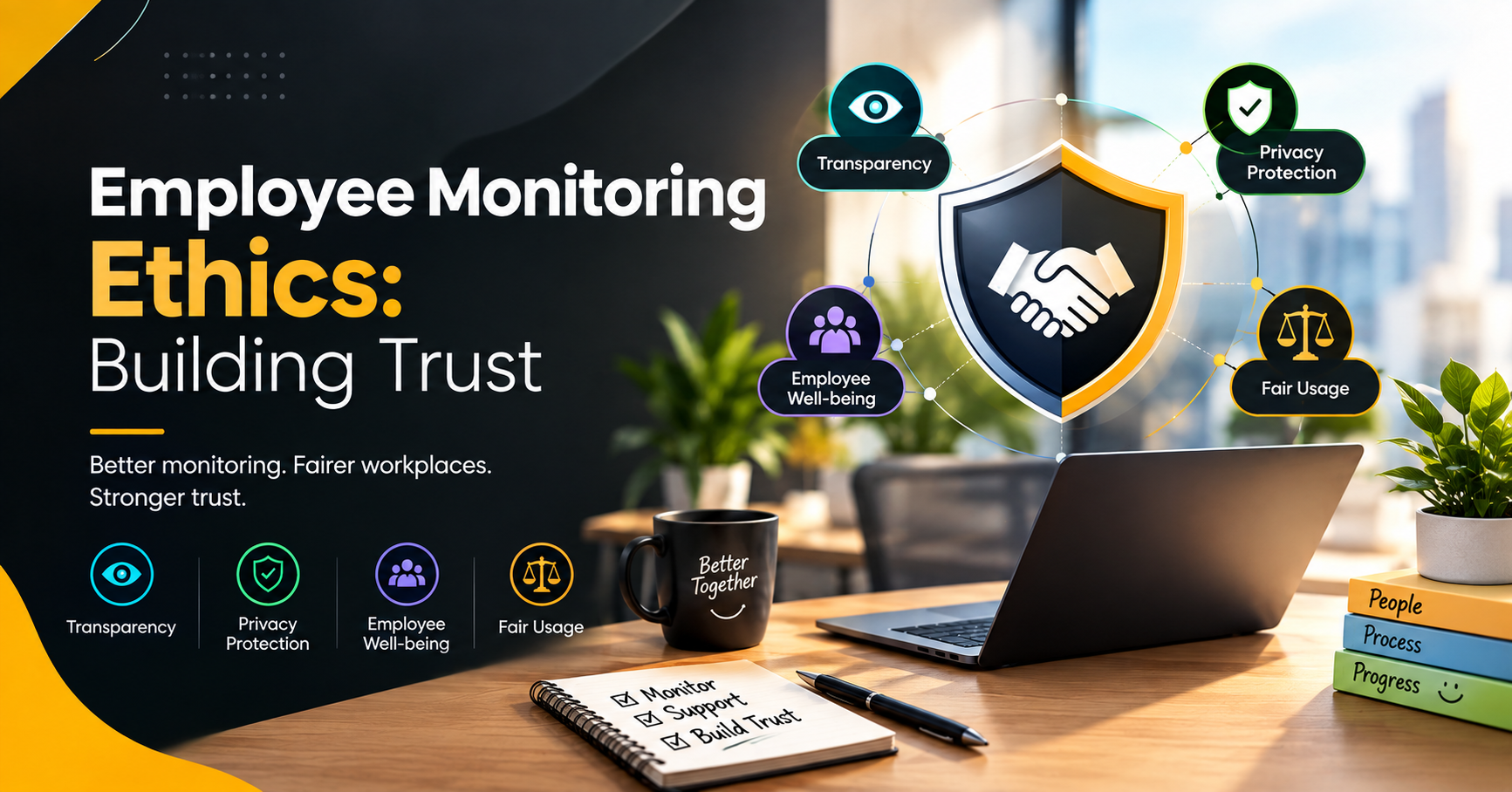
Four Principles of Ethical Employee Monitoring
The concept shown in the blog image can be summarized into four important principles:
Transparency
Employees should clearly understand what is being monitored and why.
Privacy Protection
Only relevant information should be collected, and employee data should be handled responsibly.
Employee Well-Being
Monitoring should not create unnecessary pressure or encourage constant surveillance.
Fair Usage
Monitoring data should be interpreted carefully and used consistently and responsibly.
Together, these principles can help organizations create a more balanced approach to workplace monitoring.
How Ethical Monitoring Builds Employee Trust
Trust is one of the most important outcomes of responsible employee monitoring.
When employees understand the purpose of monitoring and know that their information is handled responsibly, they may have greater confidence in the organization's processes.
Trust can be strengthened when businesses:
- Communicate monitoring policies clearly.
- Collect only relevant information.
- Protect employee data.
- Give managers proper guidelines for using monitoring data.
- Avoid unnecessary surveillance.
- Focus on productivity and outcomes.
- Apply monitoring policies consistently.
- Review monitoring practices regularly.
The objective should be to create a workplace where technology and trust work together.
Best Practices for Ethical Employee Monitoring
Organizations implementing employee monitoring should consider the following best practices:
Be Clear From the Beginning
Employees should be informed about monitoring before it becomes part of their regular work environment.
Monitor Only What Is Necessary
Avoid collecting unnecessary information simply because technology makes it possible.
Protect Monitoring Data
Employee information should be secured and access should be limited to authorized personnel.
Avoid Using One Metric to Judge Performance
Productivity should be evaluated using context, quality, responsibilities, and results.
Create Consistent Rules
Monitoring policies should apply fairly across relevant roles and teams.
Review the Policy Regularly
Technology and workplace practices change. Organizations should periodically review whether their monitoring practices are still necessary and appropriate.
Conclusion: Responsible Monitoring Builds Stronger Workplaces
Employee monitoring ethics is ultimately about finding the right balance between business visibility and employee trust.
Monitoring technology can help organizations understand productivity, improve workflows, protect business information, and manage workforce operations. But these benefits are strongest when monitoring is transparent, purposeful, privacy-conscious, and fairly implemented.
The goal should not be to monitor employees simply because technology allows it. The goal should be to use workplace monitoring responsibly to support better processes, stronger security, and a healthier working environment.
Better monitoring starts with transparency. Better workplaces are built on trust.