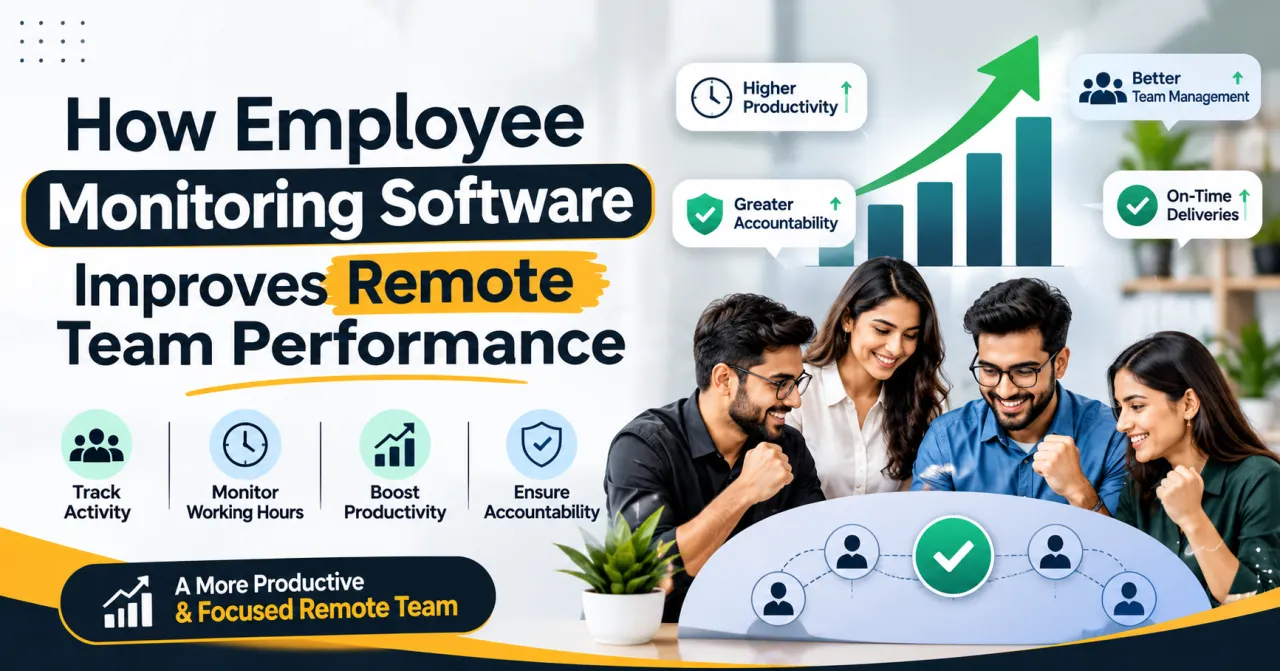
Managing a remote team can be challenging for businesses. Managers cannot always see what employees are working on, how much time they spend on different tasks, or whether projects are progressing according to schedule. Without proper visibility, it becomes difficult to identify productivity problems, manage working hours, and maintain accountability.
This is where employee monitoring software becomes useful. It helps businesses understand employee work patterns, track working hours, review application usage, and analyse productivity through organised reports. Instead of depending only on manual updates, managers can use accurate work-related information to make better decisions.
Modern employee monitoring solutions also support better communication, transparency, and workflow management. When implemented correctly, they can help remote employees stay focused while giving managers the information they need to support their teams.
In this guide, we will explore how employee monitoring software improves remote team performance and which features businesses should consider.
What Is Employee Monitoring Software?
Employee monitoring software is a digital tool that helps businesses track work-related activities, attendance, working hours, and productivity. It provides managers with information about how employees use their working time and how tasks are progressing.
Depending on the software and its configuration, features may include:
Live screen monitoring
Automatic screenshots
Employee time tracking
Attendance management
Application and website usage tracking
Productivity analytics
Break management
Detailed employee reports
For remote and hybrid teams, these features provide a centralised way to understand work patterns without relying entirely on manual reporting.
The main purpose of employee monitoring software should be to improve workflows and support employees—not to create unnecessary pressure or micromanage every activity.
1. Improves Employee Productivity
Productivity is one of the biggest challenges in remote team management. Employees may work from different locations and follow different schedules, making it difficult for managers to understand how work is progressing.
Employee monitoring software helps managers review work-related activity and identify productivity patterns. For example, reports may show how much time employees spend using work-related applications and when periods of inactivity occur.
This information can help managers:
Identify workflow delays.
Understand how working hours are being used.
Recognise productivity challenges.
Provide support where employees need it.
Improve task planning and daily work processes.
When managers understand the reasons behind productivity issues, they can make practical improvements instead of simply asking employees to work longer hours.
2. Helps Managers Track Working Hours
Tracking working hours is important for managing remote teams. Without an organised system, businesses may depend on spreadsheets, messages, or manual attendance records.
Employee time tracking software can automatically record login and logout times, total working hours, overtime, and attendance information, depending on the available features.
This helps managers and HR teams:
Maintain organised attendance records.
Review employee working hours.
Identify late arrivals and early departures.
Understand overtime patterns.
Reduce repetitive manual attendance work.
Accurate working-hour information also helps businesses plan workloads and manage employee schedules more effectively.
3. Provides Better Visibility Through Live Screen Monitoring
Managers sometimes need additional context to understand how work is progressing. Live screen monitoring can provide visibility into work-related computer activity when this feature is enabled under a clear company policy.
With this feature, authorised managers can view employee screens in real time. It can help them understand whether employees are facing technical issues, working on assigned activities, or experiencing workflow difficulties.
For example, if an employee is unable to complete a task because of a software issue, a manager may identify the problem earlier and provide assistance.
However, live screen monitoring should be used responsibly. Employees should be informed about monitoring practices, and access should be limited to authorised people.
4. Helps Identify Unproductive Work Patterns
Not every productivity problem is caused by a lack of effort. Sometimes employees spend too much time switching between applications, handling repetitive tasks, or waiting for approvals.
Employee monitoring software can provide application usage information and productivity analytics to help managers understand these patterns.
For example:
Excessive time spent on unrelated websites may indicate a distraction.
Frequent application switching may suggest an inefficient workflow.
Repeated idle periods may require further discussion.
Long delays between tasks may indicate a process bottleneck.
These insights help managers understand where improvements may be needed. They should review the context before making decisions because inactivity or unusual application usage does not automatically mean an employee is unproductive.
5. Builds Accountability in Remote Teams
Accountability is essential when employees work from different locations. Managers need a reliable way to understand whether responsibilities are being managed and whether work is progressing on time.
Employee monitoring software supports accountability by maintaining organised activity records, attendance information, and productivity reports.
Employees and managers can use these records to discuss:
Daily work progress
Working-hour patterns
Task-related challenges
Attendance and break records
Areas where additional support is required
Clear expectations and transparent reporting help create a more responsible working environment. Employees understand what is expected, while managers can make decisions based on work-related information rather than assumptions.
6. Supports Better Team Management
Managing several remote employees can become complicated when attendance, work hours, application usage, and productivity information are stored in different places.
A centralised employee monitoring software dashboard brings important information together. Managers can review team activity, identify common challenges, and understand overall work patterns from one place.
This can improve team management by helping businesses:
Review individual and team-level performance trends.
Identify employees who may need additional support.
Plan workloads more effectively.
Monitor attendance and break patterns.
Prepare reports for management reviews.
Better visibility helps managers spend less time collecting information and more time improving team performance.
7. Makes Performance Reviews More Data-Driven
Performance reviews should not depend only on memory or occasional conversations. Managers need consistent information to understand employee progress over time.
Employee monitoring software can provide daily, weekly, and monthly reports related to working hours, attendance, application usage, and productivity trends.
These reports can support performance discussions by helping managers understand:
Changes in work patterns.
Consistency in attendance.
Productivity trends over time.
Possible workflow difficulties.
Areas where training or guidance may help.
However, monitoring data should not be treated as the only measure of employee performance. Work quality, completed tasks, collaboration, creativity, and individual responsibilities are also important.
Important Features to Look for in Employee Monitoring Software
Before selecting a solution, businesses should understand which features are useful for their team.
| Feature | How It Helps |
|---|---|
| Live Screen Monitoring | Provides visibility into work-related screen activity |
| Automatic Screenshots | Creates a time-based record of selected work activity |
| Time Tracking | Records working hours and time patterns |
| Attendance Management | Helps organise login, logout, and attendance records |
| App & Website Tracking | Shows application and website usage patterns |
| Productivity Analytics | Helps identify productivity trends and possible bottlenecks |
| Break Management | Helps review break duration and patterns |
| Detailed Reports | Supports management reviews and better decisions |
The right combination of features depends on team size, business requirements, employee roles, and privacy expectations.
How Zneus Helps Improve Remote Team Performance
Zneus is a workforce productivity and employee management platform designed to help businesses manage employee activity, attendance, and productivity through a centralised system.
Its features can support remote and hybrid team management in several ways:
1. Live Screen Monitoring: Authorised managers can view employee screens in real time to gain visibility into work-related activity.
2. AI-Powered Productivity Analytics: Productivity analytics help businesses review productive and idle time patterns and understand changes in employee activity.
3. Automatic Screenshots: Configurable screenshots create a visual timeline of selected work activity throughout the working day.
4. Time and Attendance Tracking: Businesses can review login and logout times, working hours, overtime, and attendance records.
5. Application and Website Tracking: Managers can understand which applications and websites employees use during working hours.
6. Break Management: Businesses can review break durations and manage break policies more systematically.
7. Detailed Reports: Daily, weekly, and monthly reports help managers review employee activity and productivity trends.
By bringing these capabilities together, Zneus can help businesses improve work visibility, organise employee information, and make more informed workforce management decisions.
Best Practices for Using Employee Monitoring Software
Using monitoring software effectively requires more than installing a tool. Businesses should establish clear policies and use monitoring information responsibly.
Here are some important practices:
Inform employees: Explain what information is collected and why monitoring is being used.
Set clear expectations: Define working hours, responsibilities, and performance goals.
Respect employee privacy: Collect only information that is relevant to legitimate business needs.
Use data constructively: Use reports to identify workflow problems and provide support.
Avoid micromanagement: Do not judge employees based on every minute of activity.
Review performance fairly: Consider work quality, completed tasks, collaboration, and other relevant factors.
Businesses should also check applicable laws, obtain any required employee consent, and restrict monitoring data to authorised users.
Conclusion
Managing a remote team successfully requires clear communication, organised workflows, accountability, and a reliable understanding of work progress. Without proper visibility, managers may struggle to identify productivity challenges or understand how working hours are being used.
Employee monitoring software helps businesses review work-related activity, track working hours, analyse productivity patterns, and maintain organised reports. When used transparently and responsibly, it can support better team management and help employees receive the guidance they need.
Platforms such as Zneus bring features like live screen monitoring, automatic screenshots, productivity analytics, attendance tracking, application usage tracking, and detailed reporting together in one place.
The goal is not simply to monitor employees. It is to build a more organised, transparent, and productive working environment where both managers and employees can perform better.