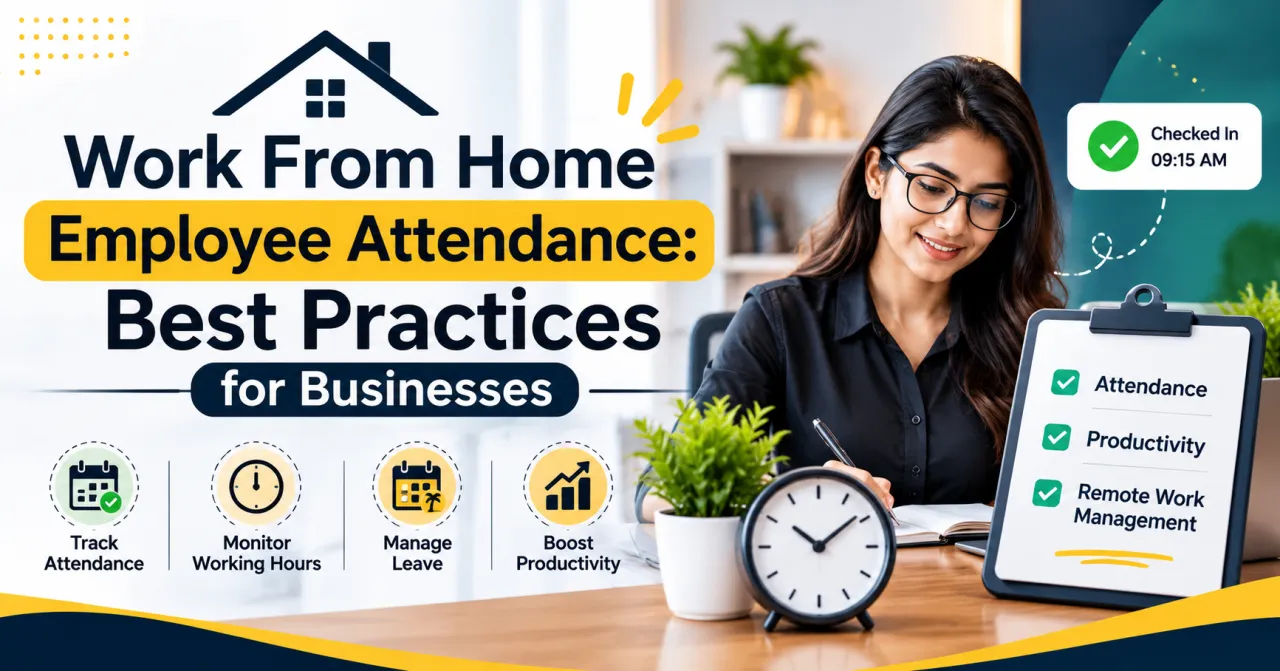
Managing employee attendance has become an important part of modern business operations. With more companies adopting remote and flexible working arrangements, businesses need reliable ways to track employee working hours, manage leaves, and maintain productivity.
Traditional attendance registers and manual timesheets are not always suitable for employees working from different locations. Businesses need a more organised approach that allows managers to monitor attendance, record working hours, and maintain transparency without creating unnecessary pressure on employees.
Work from home employee attendance management helps businesses understand when employees start working, how many hours they complete, when they take breaks, and whether they follow company attendance policies.
With the right attendance management practices and digital tools, businesses can improve workforce management, reduce attendance errors, and build a more accountable work environment.
What Is Work From Home Employee Attendance Management?
Work from home employee attendance management is the process of recording, tracking, and managing the attendance of employees who perform their duties remotely.
Instead of using physical attendance registers or office-based biometric machines, businesses can use digital attendance systems to record employee check-in and check-out times.
These systems can help managers:
Record daily employee attendance.
Track login and logout times.
Monitor total working hours.
Manage employee leave requests.
Identify late arrivals and missed check-ins.
Generate attendance reports.
Maintain accurate workforce records.
A well-organised attendance process makes it easier for businesses to manage remote teams while ensuring that employees understand their responsibilities.
Why Is Employee Attendance Tracking Important for Businesses?
Employee attendance directly affects workforce planning, productivity, and daily business operations. When attendance records are incomplete or inaccurate, managers may face difficulties calculating working hours, managing leaves, and preparing payroll information.
Here are some important reasons why businesses should maintain a proper attendance tracking process.
1. Accurate Working Hour Records
Businesses need accurate information about employee working hours. A digital attendance system can record check-in and check-out times, helping managers understand how much time employees spend working.
It also reduces dependency on manually maintained attendance sheets.
2. Better Employee Accountability
Clear attendance policies help employees understand their responsibilities. When employees know how their working hours are recorded, they can manage their schedules more effectively.
Managers can also review attendance records instead of relying only on manual updates.
3. Improved Productivity Management
Attendance records help businesses understand employee availability and working patterns. Managers can use this information alongside productivity reports to identify areas where work management can improve.
However, attendance and productivity are not the same thing. Being logged in does not automatically mean an employee is productive. Both should be evaluated using appropriate measures.
4. Easier Leave Management
Managing leave requests through emails or spreadsheets can become confusing, especially when a business has multiple teams.
A digital attendance solution can help organise leave applications, approvals, and employee absence records in one place.
5. Simplified Payroll Preparation
Accurate attendance records can support payroll calculations by providing information about working days, absences, and approved leaves.
Businesses should still verify their payroll rules and employee records before processing salaries.
8 Best Practices for Managing Remote Employee Attendance
Businesses should establish a clear and consistent attendance process. The following practices can help managers improve attendance management.
1. Create Clear Attendance Policies
The first step is to create simple attendance policies for all employees. Explain the expected working hours, check-in and check-out process, break timings, leave rules, and procedures for reporting attendance issues.
Employees should understand these policies before they begin working remotely.
2. Use Digital Attendance Management Software
Manual attendance tracking can become difficult when employees work from different locations. Digital attendance management software helps businesses record attendance and maintain organised employee records.
Managers can use these tools to review attendance information, monitor working hours, and generate reports.
3. Track Employee Check-In and Check-Out Times
Businesses should establish a consistent check-in and check-out process. Employees can record their starting and finishing times through an approved attendance platform.
This helps managers maintain accurate working-hour records and identify missing attendance entries.
4. Monitor Working Hours Transparently
Tracking working hours helps businesses understand employee availability and schedule management.
However, monitoring should be transparent and reasonable. Employees should know what information is collected, why it is collected, and how it will be used.
5. Manage Leave and Break Records
Companies should maintain proper records of employee leaves, holidays, and breaks. A centralised system makes it easier for managers to review leave requests and understand team availability.
Employees should also have a clear process for requesting leave and reporting unexpected absences.
6. Review Attendance Reports Regularly
Attendance reports help managers identify patterns such as repeated late check-ins, missing records, or frequent attendance corrections.
Regular reviews allow businesses to resolve problems early and maintain accurate records.
7. Maintain Communication With Employees
Good communication is essential for managing distributed teams. Managers should explain attendance expectations and provide employees with a simple way to report technical problems or attendance mistakes.
Regular communication also helps prevent misunderstandings about working hours and availability.
8. Choose Tools That Support Employee Privacy
Businesses should select attendance tools that collect only the information required for legitimate workforce management purposes.
Employees should be informed about monitoring practices, data collection, access permissions, and company policies. Responsible monitoring helps build trust between employees and management.
How Can Employee Attendance Software Help Businesses?
Employee attendance software can make attendance management more organised by bringing important workforce information into one system.
Depending on the software and its features, businesses may be able to:
Attendance Tracking: Record employee check-in and check-out details.
Working Hour Monitoring: Review recorded working hours and attendance duration.
Leave Management: Organise leave requests, approvals, and absence records.
Attendance Reports: Generate reports for managers and HR teams.
Productivity Insights: Review relevant work activity and productivity information.
Team Management: Manage employee records and workforce information from a central dashboard.
Platforms such as Zneus offer workforce management and productivity features, including time and attendance tracking, leave management, activity insights, and reporting. Businesses should review the available features and choose the tools that match their actual requirements.
Common Employee Attendance Management Mistakes to Avoid
Even when businesses use digital tools, some attendance management mistakes can create problems.
1. Unclear Attendance Rules: Employees may become confused if working hours and attendance expectations are not properly explained.
2. Depending Only on Manual Records: Spreadsheets and manual updates can lead to missing entries and calculation errors.
3. Ignoring Attendance Corrections: Employees should have a process to report missed check-ins, technical issues, and incorrect records.
4. Excessive Monitoring: Monitoring every employee action unnecessarily can reduce trust and create workplace discomfort.
5. Not Reviewing Attendance Reports: Collecting attendance data is not enough. Managers should review records and correct issues regularly.
Avoiding these mistakes can help businesses maintain a fair and consistent attendance management process.
Conclusion
Managing employee attendance is essential for businesses that want to maintain organised operations and improve workforce accountability. Clear policies, accurate working-hour records, proper leave management, and regular attendance reviews can make the entire process easier.
By following these best practices, businesses can create a transparent attendance system that supports both employees and managers.
Choosing suitable work from home employee attendance software can further simplify attendance tracking, reduce manual work, and provide better visibility into workforce records.
The key is to balance accurate attendance management with employee trust, privacy, and flexibility.