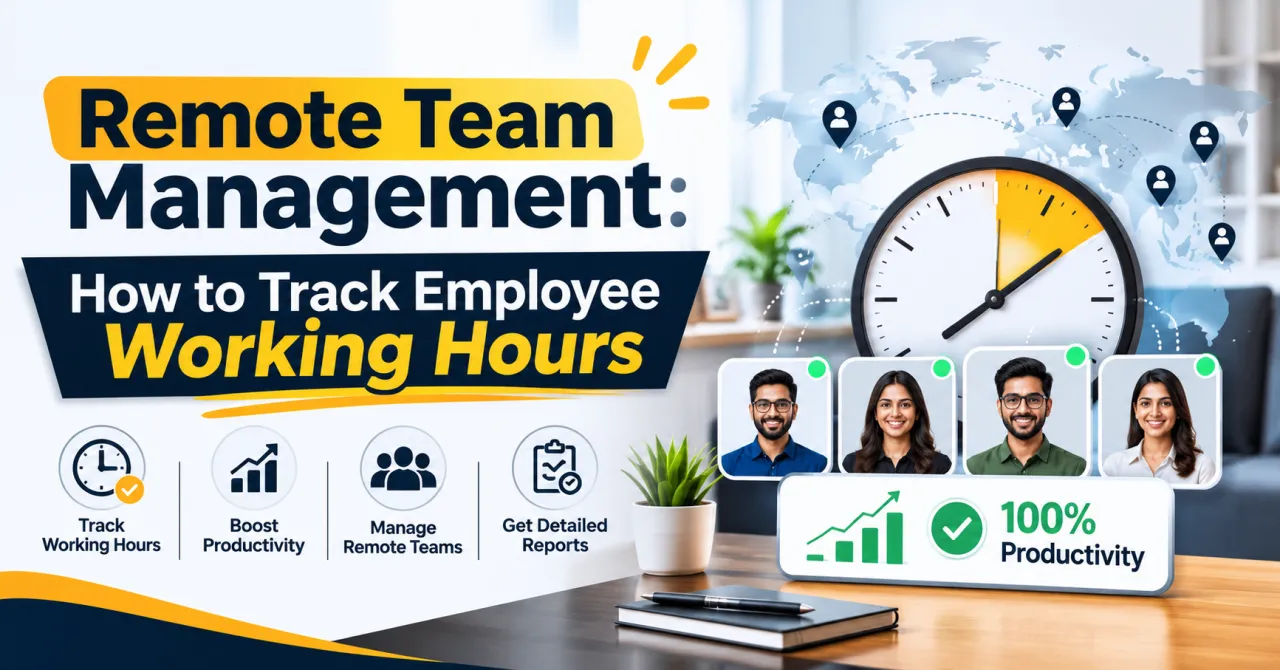
Managing a remote team can be challenging when employees work from different locations, follow different schedules, and handle multiple tasks throughout the day. Managers need a reliable way to understand how much time employees spend working, whether tasks are progressing on schedule, and how efficiently the team is using its working hours.
This is where the right employee time tracking process becomes important. Businesses can use time tracking software, attendance records, activity reports, and productivity analytics to track employee working hours and manage distributed teams more effectively.
A proper tracking system does not need to involve micromanagement. Instead, it helps businesses maintain transparency, improve accountability, reduce time wastage, and make better decisions.
Why Is It Important to Track Employee Working Hours?
Working hours provide useful information about employee availability, attendance, and task progress. Without a proper tracking system, managers may find it difficult to understand how time is being used across the team.
Here are some important reasons businesses should monitor working hours:
1. Better Time Management
Time tracking helps managers understand how employees distribute their working hours across different tasks. It also helps identify activities that take longer than expected.
2. Improved Employee Accountability
When working hours and attendance records are maintained properly, employees and managers have a clearer understanding of daily work schedules and responsibilities.
3. Accurate Attendance Records
Digital attendance systems make it easier to record login times, logout times, breaks, and total working hours. This reduces dependence on manual attendance sheets.
4. Better Productivity Insights
Time records and productivity reports help managers identify workflow problems, unnecessary delays, and opportunities to improve team performance.
5. Easier Workload Management
Managers can use working-hour reports to understand employee availability and distribute tasks more effectively.
7 Effective Ways to Track Employee Working Hours
Businesses can use different methods depending on their team size, work requirements, and management policies.
1. Use Employee Time Tracking Software
Time tracking software is one of the most convenient ways to record employee working hours. Employees can record when they start and finish work, while managers can review time records through a central dashboard.
Useful features may include:
Login and logout records
Daily and weekly timesheets
Break-time tracking
Employee attendance reports
Individual and team activity summaries
A digital system reduces manual work and makes time records easier to review.
2. Monitor Attendance and Login Activity
Attendance tracking helps businesses understand when employees begin and finish their scheduled work.
A suitable attendance system can record:
First login time
Last logout time
Total hours recorded
Late arrivals
Early departures
Break durations
Managers can use these records to review attendance patterns and identify scheduling issues.
3. Set Clear Working Schedules
Every remote team should have clearly communicated working hours or availability expectations.
Managers should define:
Expected working schedules
Meeting availability
Break policies
Daily responsibilities
Clear guidelines help employees understand what is expected and reduce confusion across different schedules.
4. Review Employee Activity Reports
Activity reports can provide additional context about how working time is being used. Depending on the software and company policy, these reports may include application usage, website activity, active and idle time, and task-related information.
Managers should use these reports to understand work patterns rather than judge performance using a single activity number.
5. Track Tasks and Project Progress
Working hours become more meaningful when they are connected to actual work. Project management tools can help managers compare time spent on tasks with their progress and deadlines.
For example, if a task regularly takes longer than expected, managers can investigate whether the workload, instructions, or process needs improvement.
6. Generate Daily and Weekly Reports
Reports make it easier to understand team performance over time. Instead of checking every employee record manually, managers can review summaries.
Useful reports include:
Daily attendance reports
Weekly working-hour summaries
Break-time reports
Team productivity reports
Task completion summaries
Regular reporting helps businesses identify patterns and make informed management decisions.
7. Use a Centralised Employee Monitoring Dashboard
A centralised dashboard brings important employee information together in one place. Managers can review attendance, working hours, activity records, and productivity information without switching between multiple systems.
This makes it easier to manage distributed teams, identify attendance issues, and understand how work is progressing.
Important Features to Look for in Employee Time Tracking Software
Choosing suitable software is important for maintaining accurate records and managing a team efficiently.
Consider these features before selecting a solution:
| Feature | How It Helps |
|---|---|
| Automatic Time Tracking | Records working time with less manual effort |
| Attendance Management | Maintains employee login and logout records |
| Activity Monitoring | Provides visibility into work-related activity |
| Screenshot Monitoring | Helps review work activity where permitted by company policy |
| Break Management | Records employee break durations |
| Productivity Reports | Helps analyse work patterns and performance |
| Team Dashboard | Displays employee information in one place |
| Data Security | Helps protect employee and business information |
The right combination of features depends on the organisation's requirements. Businesses should also consider ease of use, reporting options, employee privacy, and software costs.
How Does Employee Monitoring Improve Remote Team Management?
Employee monitoring tools can help managers understand how work is progressing across a distributed team. When implemented transparently, these tools provide useful information without requiring managers to constantly contact employees for updates.
For example, managers may be able to:
Review employee attendance and working hours.
Understand application and website usage.
Check activity summaries and idle-time records.
Review screenshots when this feature is enabled and appropriately disclosed.
Compare working-hour records with task progress.
Generate reports for individual employees and teams.
These insights help managers identify problems early and improve work processes. Monitoring should always follow applicable laws, company policies, and employee privacy requirements.
Common Mistakes to Avoid When Tracking Employee Working Hours
Even with good software, poor tracking practices can create confusion and reduce employee trust.
Avoid these common mistakes:
1. Tracking Without Clear Policies: Employees should know what information is collected and why it is collected.
2. Ignoring Employee Privacy: Monitoring should be limited to legitimate business purposes and handled transparently.
3. Focusing Only on Hours: Long working hours do not automatically mean better productivity. Task quality and results also matter.
4. Not Reviewing Reports: Collecting time records is not enough. Managers should review useful trends and take appropriate action.
5. Using Too Many Tools: Multiple disconnected systems can create duplicate records and unnecessary administrative work. A centralised solution may simplify the process.
Benefits of Using Zneus for Employee and Team Management
Businesses looking to improve employee management can consider a workforce management platform such as Zneus. A suitable platform can bring important employee information and monitoring insights together, making it easier for managers to understand attendance, working hours, and work activity.
Depending on the features selected and the organisation's policies, businesses can use employee management tools to support:
Working-hour and attendance tracking
Employee activity visibility
Application and website usage insights
Screenshot-based activity reviews
Employee reports and management dashboards
The goal should be to create a transparent and organised working environment where employees understand expectations and managers can make informed decisions.
Conclusion
Managing a distributed team requires more than assigning tasks and checking deadlines. Businesses also need a reliable way to understand attendance, working schedules, and how time is being used.
Using time tracking software, attendance records, activity reports, and centralised dashboards can help organisations track employee working hours more accurately. These tools also support better time management, accountability, and team coordination.
The most effective approach combines technology with clear communication, realistic expectations, employee privacy, and performance-based management. When businesses use tracking systems responsibly, they can build a more organised and productive team.