Remote working has changed the way businesses manage their employees and daily operations. Many companies now allow employees to work from different locations, giving them greater flexibility and helping businesses access talent from different areas. However, managing productivity outside a traditional office environment can be challenging.
Managers may find it difficult to track working hours, monitor task progress, maintain employee engagement, and ensure that business goals are achieved on time. Without proper planning and management, communication gaps, distractions, and poor time management can affect overall performance.
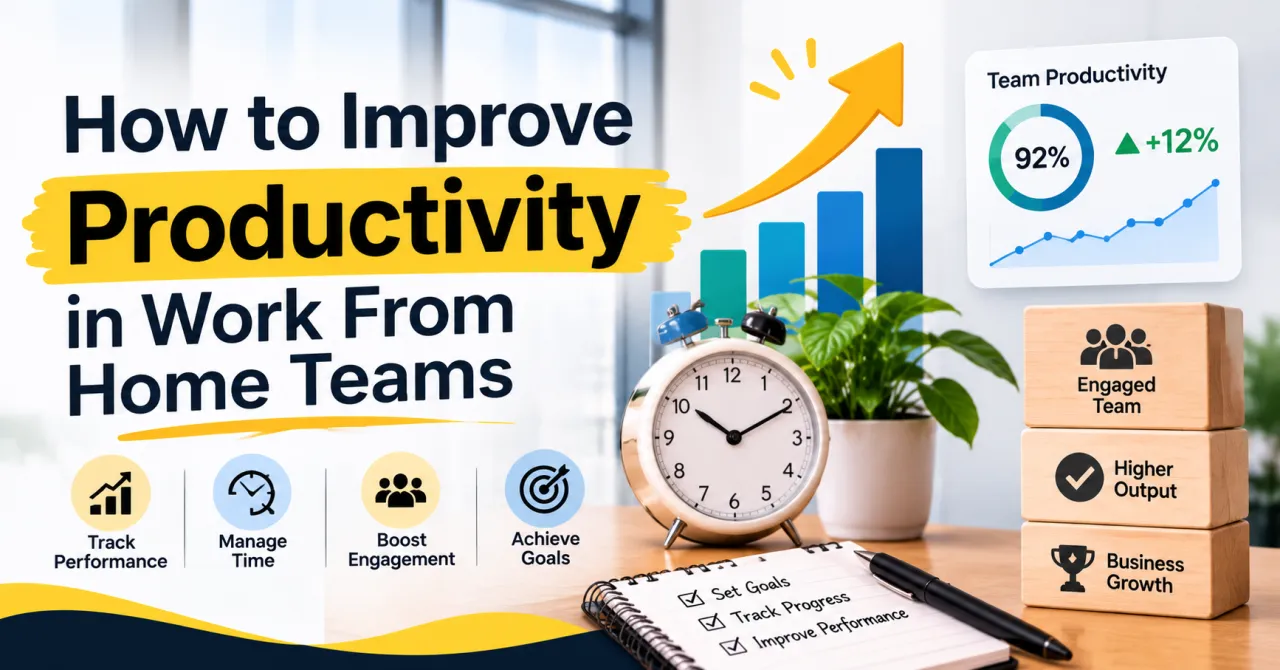
Improving productivity in work from home teams requires more than simply tracking employees' working hours. Businesses need clear goals, effective communication, performance monitoring, employee engagement, and suitable workforce management tools.
In this guide, we will explore practical ways to improve team productivity, manage working hours, monitor performance, and build a more accountable remote workforce.
1. Set Clear Goals and Daily Work Expectations
One of the most effective ways to improve productivity is to give employees clear goals and responsibilities. When team members understand what they need to complete, they can organize their work more effectively.
Managers should divide larger projects into smaller tasks and assign realistic deadlines. Every employee should know their responsibilities, priorities, and expected outcomes.
Best practices include:
Set daily, weekly, and monthly work targets.
Assign tasks according to employee roles and skills.
Define clear deadlines for important activities.
Share project priorities with the entire team.
Review completed tasks regularly.
Clear expectations help employees stay focused and allow managers to measure progress based on actual work results.
2. Track Employee Performance Regularly
Tracking employee performance helps businesses understand how effectively work is being completed. Instead of depending only on employee availability, managers should evaluate work progress, task completion, and overall performance.
A structured performance tracking process can help identify challenges early and provide employees with the support they need.
Businesses can monitor:
Task completion rates
Work quality
Time spent on assigned activities
Individual and team performance trends
Employee productivity tracking software can make this process easier by providing useful reports and performance insights. Managers can use these insights to identify improvement opportunities without constantly interrupting employees.
3. Manage Working Hours and Time Effectively
Time management plays an important role in maintaining productivity. When employees do not follow a proper schedule, tasks may take longer than expected and important deadlines can be missed.
Businesses should establish clear working hours while allowing reasonable flexibility wherever possible.
Here are some practical ways to manage working hours:
Define expected working schedules.
Encourage employees to plan their daily activities.
Track attendance and working hours accurately.
Schedule regular breaks to avoid fatigue.
Review time management patterns to identify delays.
Time tracking tools can help managers understand how working hours are being used. They can also help employees become more aware of their daily schedules and improve their work habits.
4. Boost Employee Engagement and Communication
Employee engagement is essential for building a productive team. Employees who feel connected to their organization are more likely to participate actively, communicate openly, and take responsibility for their work.
Remote teams can sometimes experience communication gaps because employees are not physically present in the same workplace. Businesses should create opportunities for regular interaction and collaboration.
Ways to improve employee engagement:
Conduct regular team meetings.
Appreciate employees for their achievements.
Encourage employees to share ideas and feedback.
Provide support when team members face challenges.
Organize team-building activities.
Maintain clear communication between managers and employees.
A positive work environment helps employees feel valued and encourages them to contribute towards common business goals.
5. Use Employee Monitoring Software Responsibly
Managing a distributed workforce becomes easier when businesses have access to the right workforce management tools. Employee monitoring software can help managers understand work activity, attendance, application usage, and productivity patterns.
For example, platforms such as Zneus provide workforce management capabilities that can help businesses monitor work activity and review employee productivity information.
Depending on the features available, businesses can use employee monitoring software for:
Live screen monitoring
Time and attendance tracking
Application and website usage tracking
Productivity analytics and reporting
These insights can help managers understand how work is progressing and identify areas that may need attention.
However, monitoring should always be transparent and responsible. Employees should be informed about monitoring practices, the purpose of data collection, and the applicable workplace policies. The objective should be to improve work processes, not to create unnecessary pressure.
6. Reduce Distractions and Improve Focus
Distractions can affect employee concentration and make it difficult to complete tasks on time. Notifications, unnecessary meetings, unclear priorities, and frequent interruptions can reduce productive working time.
Businesses should help employees create better work routines and maintain focus during important tasks.
Some useful practices include:
Encourage employees to prioritize important tasks.
Reduce unnecessary meetings.
Set specific time blocks for focused work.
Avoid excessive messages and interruptions.
Use task management tools to organize responsibilities.
Encourage employees to take planned breaks.
Managers should also review workload distribution to ensure that employees are not handling too many tasks at once.
7. Analyze Productivity Reports and Identify Improvement Areas
Productivity reports help businesses make informed decisions about team performance. Instead of relying on assumptions, managers can review actual work patterns and identify where improvements are needed.
Reports may provide information about working hours, attendance, application usage, task progress, and productivity trends, depending on the tools being used.
Managers can use these insights to:
Identify repeated delays.
Understand work patterns.
Recognize employees who need additional support.
Improve task allocation.
Review team performance over time.
Make better workforce management decisions.
Regular analysis helps businesses improve their processes and build a more organized working environment.
8. Encourage Accountability and Team Collaboration
A productive team needs accountability. Every employee should understand their responsibilities and take ownership of assigned tasks.
Managers can encourage accountability by setting measurable goals, reviewing progress, and providing regular feedback.
Team collaboration is equally important. Employees should have access to the information and resources required to complete their responsibilities.
Useful practices include:
Assign clear ownership for every task.
Share project updates regularly.
Encourage teamwork and knowledge sharing.
Provide constructive feedback.
Recognize individual and team achievements.
Maintain transparent performance expectations.
When employees understand their roles and work together effectively, teams can achieve better results.
How Zneus Can Support Team Productivity
Managing employee performance, working hours, attendance, and daily activities can become difficult when businesses depend on manual processes.
Zneus offers workforce productivity and employee monitoring capabilities that can help businesses organize and understand workforce activity.
Its features include live screen monitoring, automatic screenshots, time and attendance tracking, application and website usage tracking, productivity analytics, and reporting.
These capabilities can help managers review work activity, understand productivity patterns, and identify areas where processes may need improvement.
Businesses should use such tools as part of a transparent workforce management strategy. Combining technology with clear communication, realistic goals, and employee support can create a healthier and more productive working environment.
Common Mistakes to Avoid When Managing Remote Teams
Even businesses with good management systems can make mistakes that affect employee productivity.
Here are some common mistakes to avoid:
1. Focusing Only on Working Hours
Long working hours do not always mean better performance. Managers should also evaluate completed tasks, work quality, and results.
2. Setting Unclear Expectations
Employees may struggle when tasks, responsibilities, and deadlines are not properly defined.
3. Ignoring Employee Feedback
Regular feedback helps managers understand employee challenges and improve working processes.
4. Conducting Too Many Meetings
Unnecessary meetings can interrupt focused work and reduce the time available for important tasks.
5. Monitoring Without Transparency
Employees should understand what information is monitored and why. Responsible monitoring helps build trust and accountability.
Conclusion
Improving productivity in work from home teams requires a balanced approach that combines clear goals, effective time management, performance tracking, employee engagement, and regular communication.
Businesses should focus on measuring actual work results rather than simply counting working hours. They should also provide employees with the right tools, guidance, and support to complete their responsibilities effectively.
Workforce management platforms such as Zneus can support this process through employee activity monitoring, time tracking, attendance management, productivity analytics, and reporting capabilities.
By combining the right technology with transparent management practices, businesses can build more organized, accountable, and productive teams.