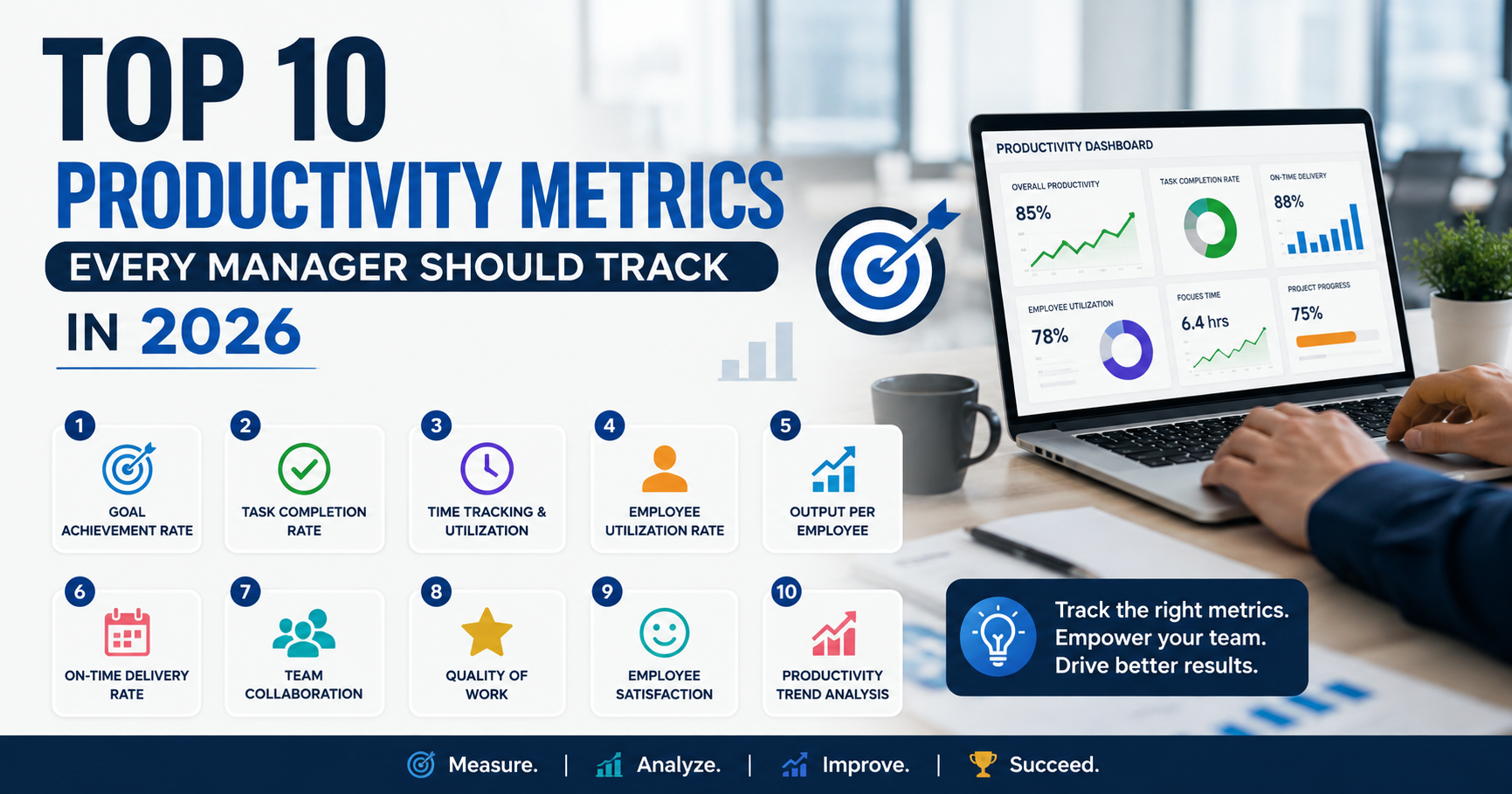
Top 10 Productivity Metrics Every Manager Should Track in 2026
In today's workplace, productivity is no longer measured by attendance alone. Employees can be online all day, attend multiple meetings, and still make little progress on meaningful work. To build high-performing teams, managers need visibility into the metrics that truly drive performance.
Here are 10 productivity metrics every manager should track:
1. Productive Time
Measure the amount of time employees spend on work-related activities versus non-productive tasks. This helps identify actual work patterns and focus levels.
2. Task Completion Rate
Track how many assigned tasks are completed within a specific period. A high completion rate often indicates effective execution and prioritization.
3. Project Progress
Monitor the status of ongoing projects against planned milestones. This provides insight into team efficiency and delivery timelines.
4. Attendance and Work Hours
While attendance isn't a measure of productivity, tracking login times, work hours, and overtime helps identify patterns in consistency and workload.
5. Application Usage
Understanding which applications employees spend time on can reveal productivity drivers and potential distractions.
6. Website Activity
Tracking website usage helps managers identify time spent on productive versus non-work-related browsing.
7. Employee Productivity Score
A consolidated productivity score can provide a quick snapshot of individual and team performance over time.
8. Idle Time
Frequent idle periods may indicate workflow bottlenecks, disengagement, or workload imbalances that require attention.
9. Break Patterns
Healthy break habits contribute to sustainable performance. Monitoring excessive or insufficient breaks can help prevent burnout and fatigue.
10. Productivity Trends
Instead of focusing on a single day's performance, track weekly and monthly productivity trends to identify improvements or emerging concerns.
Beyond Tracking: Driving Better Performance
The purpose of productivity measurement isn't to monitor employees constantly; it's to gain actionable insights. The most effective organizations use productivity data to remove bottlenecks, support employees, improve workflows, and create a culture of accountability.
By focusing on the right metrics, managers can move beyond assumptions and make data-driven decisions that improve both employee performance and business outcomes.
After all, productivity isn't about being busy. It's about creating impact.